
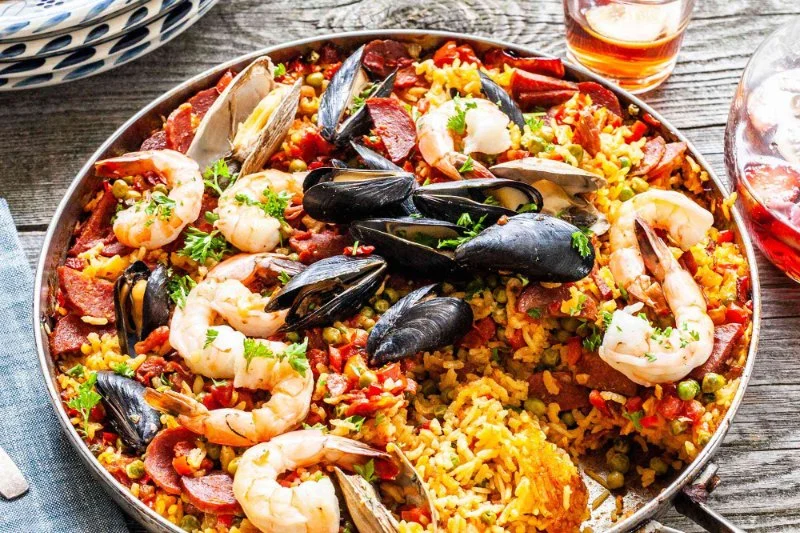
Why Arroz con Mariscos Holds a Special Place in Spanish Cuisine
Spanish arroz con mariscos, often described as a seafood paella, reflects the coastal identity of Spain. In seaside towns, this dish represents abundance, shared meals, and respect for fresh ingredients. Learning how to make Spanish arroz con mariscos at home is about more than cooking rice with seafood; it is about recreating a sense of place and tradition.
For American home cooks, this dish often becomes a centerpiece meal. It invites people to gather around the table, wait patiently as flavors develop, and enjoy the result together. That communal spirit is central to Spanish food culture.

Rice & Beans Bar and Restaurant
HarrisburgDauphin CountyPennsylvania
319 S 17th St, Harrisburg, PA 17104, USA
Understanding the Foundation of a Great Seafood Paella
Every successful seafood paella recipe begins with a strong foundation. The type of rice, the cooking vessel, and the base flavors all influence the final result. Short-grain rice that absorbs liquid evenly is essential, as it carries the flavors of broth, aromatics, and seafood.

1. Rice, Pan, and Heat Control
Traditional Spanish cooks rely on wide, shallow pans that allow rice to cook evenly. Even at home, replicating this principle helps achieve consistent texture. Heat control matters just as much, as uneven heat can leave rice undercooked in some areas and mushy in others.
2. The Role of Broth and Aromatics
Seafood stock forms the backbone of arroz con mariscos. Combined with onions, garlic, tomatoes, and paprika, it builds layers of flavor before the seafood is even added. This step is where depth is created, long before the dish looks finished.
Building Flavor Step by Step
Spanish arroz con mariscos is a dish that rewards patience. Each step builds on the previous one, and skipping or rushing stages often results in a flatter taste.
1. Developing the Sofrito
The sofrito, a slow-cooked mixture of vegetables and oil, is where much of the flavor begins. Cooking it gently allows natural sweetness to emerge, providing balance to the briny seafood added later.
2. Adding Rice at the Right Moment
Rice is stirred briefly to coat it in the sofrito before liquid is added. This step helps control texture and ensures even absorption. Once the broth is poured in, stirring stops, allowing the rice to settle and cook properly.
Managing Seafood and Rice for the Right Balance
Timing is everything when working with seafood. Adding shellfish and fish too early can lead to overcooking, while adding them too late prevents flavors from blending.
1. Layering Seafood Thoughtfully
Many cooks add firmer seafood first, followed by more delicate items toward the end. This approach preserves texture while allowing the rice to absorb the essence of the seafood.
2. Letting the Dish Rest
Once cooking is complete, resting the paella briefly allows flavors to settle. This pause is often overlooked but makes a noticeable difference in overall taste and cohesion.
Real Home Cooking Stories and Lessons Learned
A widely shared social media post once described a first attempt at seafood paella that went wrong due to constant stirring. The cook later tried again, following traditional advice, and achieved a dramatically better result. That experience echoed across comments from others who learned similar lessons through trial and error.
Another home cook shared how making Spanish arroz con mariscos became a monthly tradition, evolving with seasonal seafood and personal preferences. These stories highlight that mastery comes from practice rather than perfection.
Bringing Spanish Coastal Cooking Into Your Kitchen
Learning how to make Spanish arroz con mariscos is an invitation to slow down and cook with intention. It encourages respect for ingredients and an appreciation for process over shortcuts.
For those interested in sourcing authentic ingredients or exploring Spanish culinary traditions further, Rubi Spanish Table offers inspiration rooted in genuine Spanish food culture. With thoughtful preparation and curiosity, home cooks in the U.S. can bring the warmth and depth of Spanish coastal cooking to their own tables.

 Latino's Kitchen4.0 (662 reviews)
 Ibiza Restaurant Hamden4.0 (325 reviews)
 Paella Tapas Wine Bar Restaurant4.0 (147 reviews)
 El Cacique Food Truck5.0 (3 reviews)
 TRES Cazuelas Artisanal Latin Cuisine4.0 (571 reviews)
 Socarrat Paella Bar - Nolita4.0 (1112 reviews)
 How to Make Spanish Albóndigas de Pescado: Fish Meatballs in Tomato Sauce
 The Best Spanish Restaurants in Indianapolis for Family Dining
 How to Make Spanish Chistorra al Horno: Baked Spanish Sausage Recipe
 Exploring Spanish Seafood Recipes for Home Cooking
 How to Make Spanish Piquillos con Chistorra: Piquillos with Chistorra
 How to Make Spanish Fabada Asturiana – A Hearty Bean Stew