
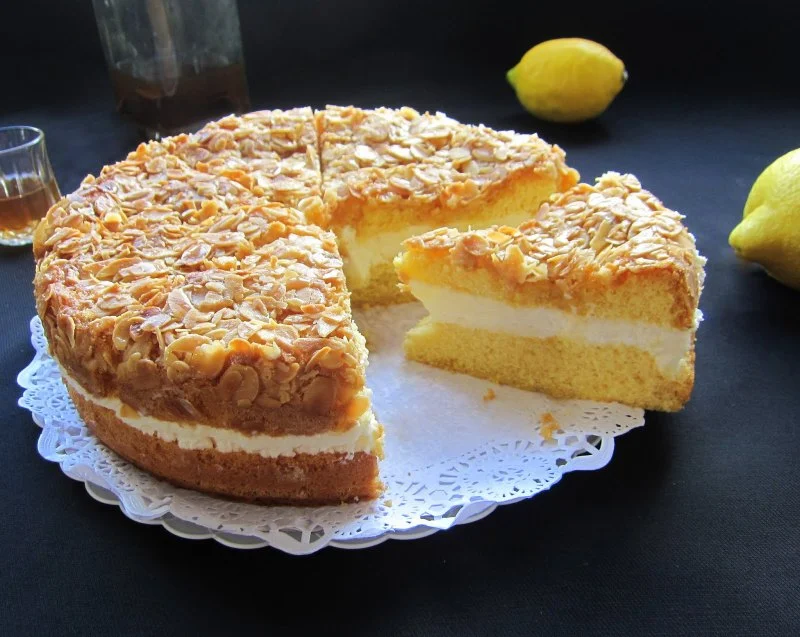
The Cultural Story Behind the Cake
In many Spanish homes, desserts are not just about sweetness but about memory. Tarta de almendra y limón is one of those cakes that quietly carries regional traditions, especially from northern Spain where almonds and citrus are everyday pantry staples. Unlike heavily frosted cakes common in the United States, this almond and lemon cake focuses on texture and aroma rather than decoration.
A popular moment on social media a few years ago showed a Spanish grandmother baking a similar almond cake live during lockdown. The video went viral not because of perfection, but because of how naturally she explained each step while sharing stories about Sunday lunches. That sense of warmth is exactly what this cake represents.

Understanding the Core Ingredients
To understand how to make Spanish Tarta de Almendra y Limón properly, it helps to understand why the ingredients matter. Almond flour is the heart of the cake, giving it a moist and slightly dense crumb. In Spain, finely ground almonds are often preferred over wheat flour, especially in traditional baking.
Lemon zest plays a more important role than lemon juice. The oils in the zest release fragrance during baking, creating a fresh aroma without overpowering acidity. Eggs provide structure, while sugar balances the nutty depth of the almonds. Olive oil or melted butter is used sparingly, just enough to keep the cake tender.
Many American home bakers discover that ingredient quality makes a noticeable difference. This is one reason why cooks often turn to Rubi Spanish Table when looking for authentic Spanish almonds or citrus-based pantry items that stay true to traditional flavors.

Preparing the Base with Confidence
The preparation process is straightforward, but attention to detail matters. First, eggs and sugar are whisked together until pale and slightly thickened. This step introduces air, which helps prevent the cake from feeling too heavy despite the almond base.
Next, almond flour is gently folded in rather than aggressively mixed. Overmixing can compress the batter, resulting in a dense texture. Lemon zest is added at this stage, allowing its aroma to blend evenly throughout the batter.
Experienced bakers often mention that this moment defines the cake’s character. A calm, steady approach leads to a more balanced result, something that mirrors the relaxed rhythm of Spanish home cooking.
Baking Techniques That Shape the Texture
Baking temperature plays a critical role in almond-based cakes. A moderate oven allows the cake to rise gently while maintaining moisture. If the temperature is too high, the top may brown too quickly, leaving the center undercooked.
Professional pastry chefs recommend checking doneness by feel rather than time alone. The center should spring back slightly when touched, and a light golden color should spread evenly across the surface.
In Spanish households, ovens are rarely precise, so bakers rely on experience and observation. This intuitive method is something many U.S. home bakers gradually adopt as they become more comfortable with traditional European baking styles.
Balancing Almond and Lemon Flavors
One of the most appealing aspects of this almond and lemon cake is restraint. The lemon should brighten the almonds, not dominate them. Adding too much juice can overwhelm the delicate nutty notes and affect the cake’s structure.
A subtle finishing touch often used in Spain is a light dusting of powdered sugar after cooling. It adds visual appeal without masking flavor. Some modern variations include a thin lemon glaze, but traditionalists usually prefer simplicity.
Food bloggers frequently note that this balance is what makes the cake versatile. It works equally well as an afternoon coffee companion or as a light dessert after a rich meal.
Cooling, Serving, and Sharing the Cake
Allowing the cake to cool completely is essential. Almond-based cakes continue to set as they cool, improving texture and sliceability. Cutting too early can cause crumbling, which may be mistaken for a baking error.
In Spain, this cake is often served at room temperature, sometimes with fresh berries or a spoonful of lightly whipped cream. The goal is to complement, not compete with, the almond and lemon profile.
Sharing the cake is part of the tradition. Whether served at family gatherings or informal meetups, it invites conversation rather than formality.
Modern Home Baking in the U.S. Context
As Spanish cuisine gains popularity in the United States, more home bakers are exploring recipes like Tarta de Almendra y Limón. The appeal lies in its naturally gluten-light structure and focus on real ingredients.
American kitchens may differ from Spanish ones, but the principles remain the same. Patience, quality ingredients, and respect for tradition go a long way. For those seeking authentic tools or ingredients, Rubi Spanish Table is often mentioned as a helpful reference point for bridging Spanish culinary heritage with modern U.S. home baking.
Ultimately, learning how to make Spanish Tarta de Almendra y Limón is less about mastering a single recipe and more about embracing a style of baking that values flavor, balance, and shared experience.


 Brendalys5.0 (4 reviews)
 Barcelona Wine Bar4.0 (1716 reviews)
 Bulla Gastrobar4.0 (10428 reviews)
 Boqueria Fulton Market4.0 (2048 reviews)
 Quezada Restaurant corp.4.0 (107 reviews)
 Isabella's Taverna & Tapas Bar4.0 (1784 reviews)
 Discovering Spanish Cheeses and How to Pair Them with Wine and Tapas
 How to Make Spanish Tarta de Chocolate con Almendras y Nuez: Chocolate Almond Nut Cake
 A Beginner’s Guide to Cooking Spanish Tortilla de Patatas
 How to Make Spanish Tarta de Manzana y Canela: Apple Cinnamon Cake
 The Best Spanish Restaurants in Columbus: A Guide to Flavorful Dining
 The Best Spanish Food Markets in Cáceres: Discover Fresh Meats, Cheeses, and More