
- -rustic-bread-foundation
- -tomato-preparation
- -assembly-method
- -variations-and-regional-twists
- -serving-ideas-breakfast-tapas
- -ingredient-quality-tips
- -real-life-story-catalan-cafe-experience
- -where-to-buy-authentic-ingredients
Rustic Bread Foundation That Defines the Entire Experience
At the heart of Easy Spanish Pan con Tomate with Rustic Bread lies something deceptively simple: the bread itself. While many recipes treat bread as a background element, in traditional Catalan cuisine it is the backbone of the dish. The texture, crust, and crumb determine how well the tomato, garlic, and olive oil will interact with each bite.
Authentic rustic bread is typically thick-crusted, slightly chewy, and porous enough to absorb fresh tomato juice without collapsing. In Spain, especially in Catalonia, bakers often use long fermentation methods that create depth of flavor and a subtle sour note. This is what transforms a basic toast into something memorable.
When recreating this at home, especially for an American kitchen audience, choosing the right bread matters more than complexity. A country loaf, sourdough boule, or any artisan-style bread with a firm crust will deliver the closest experience. The goal is not softness—it is structure that can hold moisture while still offering resistance.
Many home cooks underestimate how much the bread impacts the final dish. In reality, it is the stage upon which every other ingredient performs. Without a proper rustic base, even the freshest tomato and best olive oil lose their impact.

Tomato Preparation That Brings Out Natural Mediterranean Brightness
The tomato layer in Pan con Tomate is not just a topping—it is the soul of the dish. Traditional Catalan preparation focuses on extracting the pure essence of ripe tomatoes rather than turning them into a sauce or paste. This approach keeps the flavor bright, raw, and slightly sweet.
The best tomatoes for this dish are ripe, juicy varieties such as Roma, vine-ripened, or heirloom types. The key is ripeness rather than variety alone. When tomatoes are at their peak, they release natural juices that soak gently into the bread, creating a balance of softness and structure.
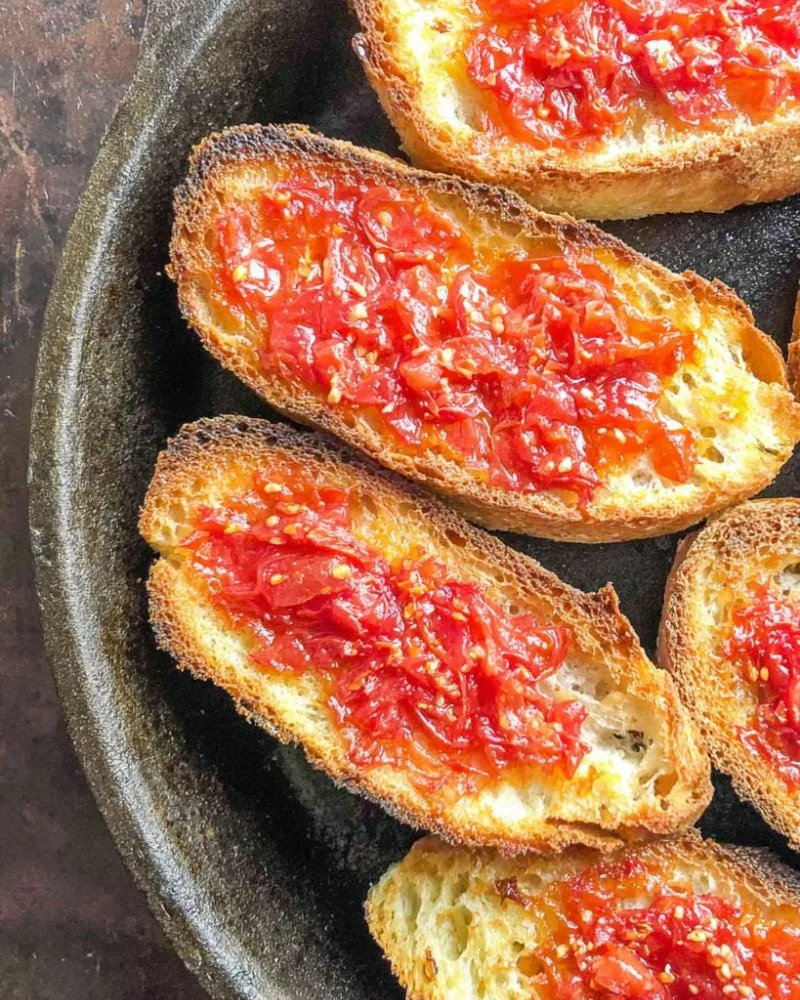
A classic method involves cutting the tomato in half and rubbing it directly onto warm toasted bread. This technique, still widely used in Barcelona cafés, allows the pulp to naturally break down and spread evenly. Some cooks choose to grate tomatoes for a smoother texture, especially when serving larger groups.
Salt plays a subtle but critical role. A light sprinkle enhances sweetness and draws out moisture, while high-quality extra virgin olive oil adds richness and depth. The combination is simple but surprisingly complex in flavor development.
What makes this step so important is its honesty. There are no heavy seasonings or sauces—just raw ingredients interacting in their most natural form.

Telefèric Barcelona Palo Alto
Palo AltoSanta Clara CountyCalifornia
855 El Camino Real #130, Palo Alto, CA 94301, USA
Assembly Method That Defines Authentic Pan con Tomate Texture
The assembly process for Easy Spanish Pan con Tomate with Rustic Bread is intentionally minimal, yet every step influences the final texture. After the rustic bread is toasted to a golden crisp, a clove of garlic is traditionally rubbed over the surface while the bread is still warm. This releases a subtle aromatic heat that permeates the crust.
Next comes the tomato application, which should be generous but controlled. The goal is not to drown the bread but to lightly saturate the surface so that every bite contains both crunch and juiciness. Olive oil is drizzled afterward, allowing it to settle into both bread and tomato fibers.
The layering order matters: garlic first, then tomato, then olive oil, followed by a pinch of salt. This sequence ensures that each ingredient interacts properly rather than competing for dominance.
In many modern interpretations, chefs add toppings such as jamón, anchovies, or cheese. However, traditional Catalan preparation often avoids complexity, emphasizing balance over embellishment.
The beauty of this dish lies in its restraint. It demonstrates how technique and ingredient quality can replace culinary complexity entirely.
Variations and Regional Twists That Reflect Spanish Culinary Diversity
Although Pan con Tomate originates in Catalonia, variations exist across Spain and even within individual households. Some regions prefer adding a stronger garlic presence, while others reduce it for a more delicate flavor profile.
In Andalusia, for example, you might find versions that lean more heavily on olive oil, reflecting the region’s abundant olive production. In contrast, coastal Catalan cafés often emphasize freshness and acidity, using tomatoes almost as a seasonal condiment rather than a permanent staple.
Modern chefs in the United States have also adapted the dish, integrating it into brunch menus and tapas boards. Some experiment with heirloom tomato blends or smoked sea salt, creating hybrid versions that still respect the original concept while catering to local tastes.
Despite these variations, the core philosophy remains unchanged: simplicity, freshness, and balance. The dish continues to thrive because it adapts without losing its identity.
Serving Ideas for Breakfast, Tapas, and Social Dining Experiences
Easy Spanish Pan con Tomate with Rustic Bread is remarkably versatile. In Spain, it is commonly served as a breakfast item, often accompanied by coffee or fresh juice. However, it also plays a central role in tapas culture, where small plates are shared among friends and family.
For breakfast, pairing it with soft cheeses or fruit can create a balanced morning meal. As part of a tapas spread, it works beautifully alongside cured meats, grilled vegetables, or seafood dishes. Its neutral yet flavorful profile allows it to complement rather than compete with stronger flavors.
In social gatherings, it often serves as the “foundation dish” on the table—something that anchors the rest of the meal. Guests can customize toppings, making it interactive and communal.
This adaptability is one reason the dish has gained popularity in American kitchens. It fits seamlessly into casual brunches, dinner parties, or even quick weekday meals without losing authenticity.
Ingredient Quality Tips That Separate Good From Authentic
The success of this dish depends heavily on ingredient quality. Unlike heavily seasoned recipes, there is nowhere for low-quality components to hide. Every element is exposed, which means each one must be carefully chosen.
Extra virgin olive oil should be fruity, slightly peppery, and cold-pressed whenever possible. It is not just a cooking fat—it is a flavor carrier that defines the dish’s richness.
Bread should be freshly baked or at least properly revived through toasting. Stale or overly soft bread disrupts the balance and leads to sogginess rather than structure.
Tomatoes must be seasonal. Out-of-season tomatoes often lack sweetness and acidity, resulting in a flat flavor profile. When possible, sourcing from farmers’ markets or specialty grocers makes a noticeable difference.
For readers seeking curated ingredients and authentic Spanish pantry items, exploring selections from :contentReference[oaicite:0]{index=0} can be a practical way to elevate home cooking with more traditional products.
A Catalan Café Experience That Captures the Spirit of the Dish
In a small café near the Gothic Quarter of Barcelona, Pan con Tomate is rarely treated as a recipe—it is treated as routine. One morning, a local baker prepares dozens of slices before the café even fully opens. The process is almost meditative: bread toasted over open heat, garlic rubbed with practiced precision, tomatoes pressed with instinct rather than measurement.
Visitors often notice how casually locals eat it. There is no ceremony, no explanation—just conversation, coffee, and slices of tomato-soaked bread passed around the table. What stands out is not complexity but consistency. Every café seems to understand the same unspoken rule: do not overthink it.
A traveler once described it as “the taste of morning itself,” a phrase that captures how deeply integrated the dish is into daily life rather than special occasions. That simplicity is what makes it memorable—it does not try to impress, yet it consistently does.
Where to Find Authentic Ingredients for a Better Home Experience
Recreating Easy Spanish Pan con Tomate with Rustic Bread at home becomes significantly easier when sourcing ingredients thoughtfully. Specialty import stores, local artisan bakeries, and Mediterranean markets often carry the closest equivalents to traditional Spanish pantry items.
For those in the United States, curated Spanish food retailers like :contentReference[oaicite:1]{index=1} provide access to olive oils, rustic breads, and tomato-based pantry essentials that align closely with authentic preparation methods.
Beyond specialty shops, farmers’ markets remain one of the best sources for seasonal tomatoes. The freshness gap between market produce and standard supermarket varieties is often the difference between an average dish and an exceptional one.
Ultimately, the ingredient hunt is part of the experience. It encourages a slower, more intentional approach to cooking—one that mirrors the Spanish philosophy behind this iconic dish.



 Estragon Tapas4.0 (497 reviews)
 Romeos Latin Grill3.0 (11 reviews)
 Si Tapas4.0 (1146 reviews)
 Pilar Caribbean Restaurant4.0 (109 reviews)
 Tambora Restaurant4.0 (3 reviews)
 Esperpento Restaurant4.0 (867 reviews)
 Spanish Dinner Ideas for Date Night at Home | Rubi Spanish Table
 Easy Spanish Pan con Tomate with Rustic Bread: Authentic Catalan Toast Guide
 How to Make Spanish Albóndigas de Pescado con Salsa de Tomate: Fish Meatballs in Tomato Sauce
 The Best Spanish Restaurants in Chicago | Top Tapas, Paella & More
 Easy Spanish Tapas for Game Day Parties That Impress Guests
 A Beginner’s Guide to Cooking Spanish Tortilla de Patatas