
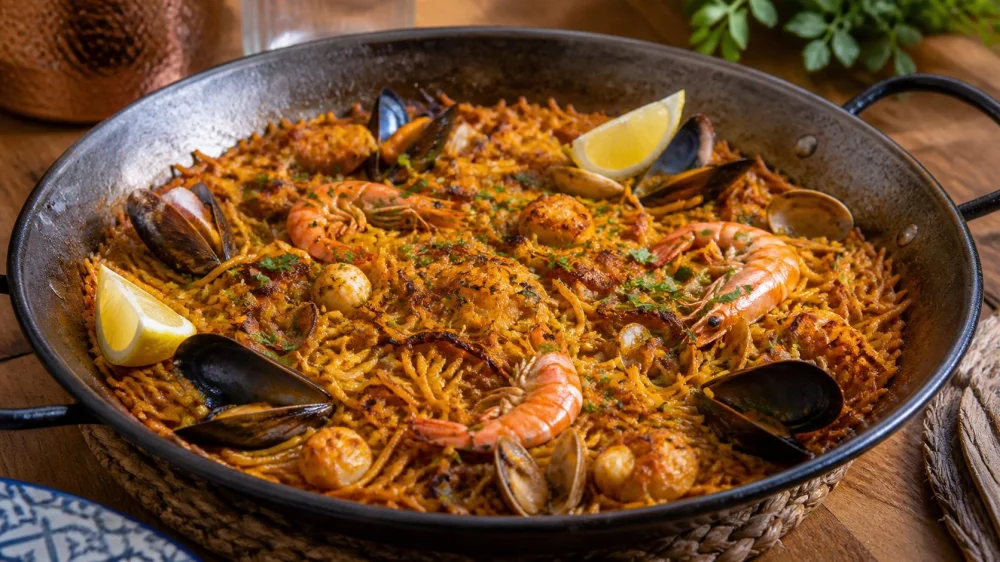
Fideuà at a Spanish Restaurant: Noodles, Seafood, Socarrat, and Timing
On this page
Quick answer
Fideuà is a shallow-pan noodle dish whose recipe can include fish stock, shellfish, squid, chicken, vegetables, garlic, and aioli. Ask about the pan size, minimum order, preparation time, seafood shells, allergens, and whether the bottom is intentionally toasted. Order early, let staff place the hot pan securely, divide from the edge with a serving utensil, and keep aioli in personal portions. For takeout, cool and refrigerate promptly under restaurant guidance.
3 Flags Grill & Restaurant
Lacey TownshipOcean CountyNew Jersey
121 S Main St, Forked River, NJ 08731, USA
Why it matters
The wide pan, hot handles, shellfish, concentrated stock, and toasted base shape both experience and safety. Large portions also require pacing so noodles are eaten before texture declines.
This United States dining guide is general. Regional recipes, noodle types, seafood, allergens, doneness, pan materials, pricing, and food-safety instructions vary by restaurant.
Practical checklist
- Ask which noodles, stock, proteins, shellfish, vegetables, and garnishes are included.
- Disclose fish, shellfish, egg, wheat, garlic, and other allergies and ask about cross-contact.
- Confirm serving size, minimum order, price, and cooking time.
- Ask whether aioli is included or optional.
- Clear a heat-safe space before the pan arrives.
- Request shell bowls, serving utensils, and extra plates.
- Plan prompt storage for leftovers.
Step-by-step plan
- Order the fideuà early enough for its quoted cooking time and coordinate other courses.
- Let staff set the pan on a trivet and treat both handles and edges as hot.
- Pause for steam to settle, then serve modest portions from the outer edge.
- Remove shells carefully on a personal plate and keep discarded shells in the provided bowl.
- Taste before adding lemon or aioli so the stock and toast level remain clear.
- Share the crisp bottom only after confirming that darker areas are intended toast rather than an off flavor.
- For leftovers, transfer to suitable shallow containers, refrigerate promptly, and follow reheating guidance.
For allergy-sensitive or group orders, note ingredients, cross-contact discussion, pan size, order and service times, seafood shells, takeout time, refrigeration, and receipt.
Limits and warning signs
A browned base may be intentional, but appearance alone cannot verify safe seafood or identify allergens. Removing visible shellfish does not remove fish stock or cross-contact.
Tell staff immediately about raw or off-smelling seafood, a damaged pan, unsafe hot placement, or an incorrect allergy-sensitive dish. Use emergency services for choking or a severe allergic reaction.
Frequently asked questions
Is fideuà rice?
No. It is generally made with noodles, though noodle shape and recipe vary.
Does it always contain seafood?
No, but seafood and fish stock are common; ask about the exact recipe.
What is the crisp layer on the bottom?
Some kitchens aim for a toasted base similar in spirit to socarrat; ask how the restaurant describes it.
Why does it take longer than tapas?
It may be cooked or finished to order in a wide pan, so confirm timing before planning the meal.
Sources and evidence
The guide applies hot-pan, seafood, allergy, shared-service, and leftover principles: verify the recipe, confirm timing and portion, protect the landing area, use serving utensils, and refrigerate promptly.
Conclusion and next steps
Confirm ingredients, allergens, pan size, price, and cooking time. Clear space for the hot pan, serve controlled portions with shell bowls, and arrange prompt storage for any leftovers.
 Bistro Basque4.0 (220 reviews)
 Bulla Gastrobar4.0 (12370 reviews)
 Spain Inn 24.0 (783 reviews)
 TU Chicken4.0 (86 reviews)
 Alegria Dominicana Restaurant4.0 (227 reviews)
 Elba’s Deli & Restaurant Inc4.0 (214 reviews)
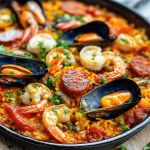 Spanish Appetizers with Fresh Seafood: A Culinary Guide
 Spanish Mediterranean Dinner Menu Ideas for a Perfect Tapas-Style Evening
 Discovering the History of Spanish Tapas and How They Evolved
 Discovering the Unique Flavors of Spanish Olive Oil-Based Dishes
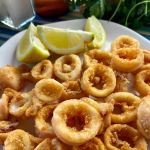 How to Make Spanish Calamares a la Andaluza con Limón: Andalusian Squid with Lemon Recipe
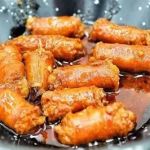 How to Make Spanish Chistorra a la Sidra: Chistorra with Cider