
How to Order Spanish Cured Ham at a Restaurant
In this guide
A Spanish restaurant may list several cured hams with unfamiliar names, origins, and prices. One plate might be labeled serrano, another ibérico, and a premium selection may add words about breed, feeding, or protected origin. The goal is not to memorize every classification before dinner. A few distinctions help you choose a plate that fits the table, compare prices fairly, and appreciate why thin slicing and serving temperature matter.

Quick answer
Ask whether the ham is jamón serrano or jamón ibérico, whether a premium ibérico selection specifies breed percentage and production category, how large the plate is, and whether it is hand-sliced to order. Serrano is cured ham generally made from non-Iberian white pig breeds; ibérico refers to products from Iberian-breed pigs under defined Spanish labeling rules. Within each broad family, producer, origin, aging, cut, storage, and slicing strongly affect the experience. Order a smaller tasting plate when comparing styles and let the ham warm enough for its aroma and fat texture to become expressive.
Start with the basic terms
Jamón means ham and, on this kind of menu, usually refers to a cured hind leg. The meat is salted, dried, and matured over time rather than cooked like a fresh roast. Curado means cured. Bodega, reserva, and gran reserva may appear in commercial descriptions, but their meaning and significance depend on the applicable product specification and producer; do not treat every attractive adjective as a universal grade.
Protected designations and recognized quality marks can identify a product tied to a defined origin or method. Spain's Ministry of Agriculture distinguishes quality categories such as Protected Designation of Origin (DOP), Protected Geographical Indication (IGP), and Traditional Speciality Guaranteed (ETG). A restaurant should be able to identify the actual product rather than using regional language loosely.
Jamón serrano and jamón ibérico
Jamón serrano is a Spanish-style dry-cured ham typically produced from white pig breeds. It can be savory, clean, and firm, with quality shaped by the raw material, curing time, climate, and producer. It is not simply “cheap ibérico.” It is its own tradition and may be the better choice for a larger shared plate, a sandwich-style preparation, or diners who prefer a leaner, straightforward cured-ham profile.
Jamón ibérico comes from Iberian-breed pigs and is known for fine marbling, aromatic fat, and a texture that can become supple at room temperature. Spain regulates the naming of ibérico ham, shoulder, loin, and fresh meat, including breed and production information. The Spanish Ministry's official breed catalogue describes characteristic fat infiltration in ibérico products, which contributes to their aroma and eating quality.
Neither name alone tells the complete story. A carefully produced serrano can be more enjoyable than a poorly stored premium ham, and ibérico covers more than one category. Compare specific products, not stereotypes.
Understand ibérico descriptions
Premium menus may use phrases such as bellota, cebo de campo, cebo, and 100% ibérico. These words concern production category and breed information rather than flavor notes invented by the restaurant.
- 100% ibérico describes breed purity under the regulated system. If the percentage is lower, the product may still legally be ibérico when it meets the applicable requirements and is labeled accordingly.
- Bellota is associated with pigs finished during the montanera period using dehesa resources including acorns under the standard's conditions.
- Cebo de campo and cebo indicate other production and feeding systems defined by the regulation.
A concise menu may omit detail that appears on the producer's label. Ask the server to show or describe the full product name if category is important to the purchase. Do not reduce the system to one color code seen in a retail infographic; a restaurant plate should be represented by the actual certified product and its denomination.
Jamón versus paleta
Jamón is the cured hind leg. Paleta is the cured shoulder. Paleta is smaller, has a different bone structure, and often provides a robust flavor with a different ratio of fat and lean. It is not merely scraps or an imitation of ham.
A restaurant may offer ibérico paleta at a lower price than an otherwise comparable jamón. That can be an excellent way to experience Iberian cured meat without ordering the most expensive hind-leg plate. Ask whether a mixed tasting is available; comparing two cuts side by side makes the distinction more meaningful than reading descriptions.
Choose a useful portion
Restaurants may sell cured ham by plate size, weight, or tasting portion. Grams are more useful for comparing quantity than vague labels such as small and large, but presentation and accompaniments still matter. Thin slices spread across a plate can look abundant while representing a modest weight.
For two diners sampling several tapas, a small plate may be enough. A larger group can share a standard plate, but cured ham is intense and salty, so it need not function as the meal's primary protein. If the menu lists several hams, choose a flight or the two smallest portions rather than full plates of each.
Ask whether bread or tomato bread is included and whether accompaniments are counted in the plate price. Premium hand-carved ham can be priced much higher per ounce than other charcuterie because the source product, long maturation, yield, and skilled slicing contribute to cost.
Notice slicing and serving temperature
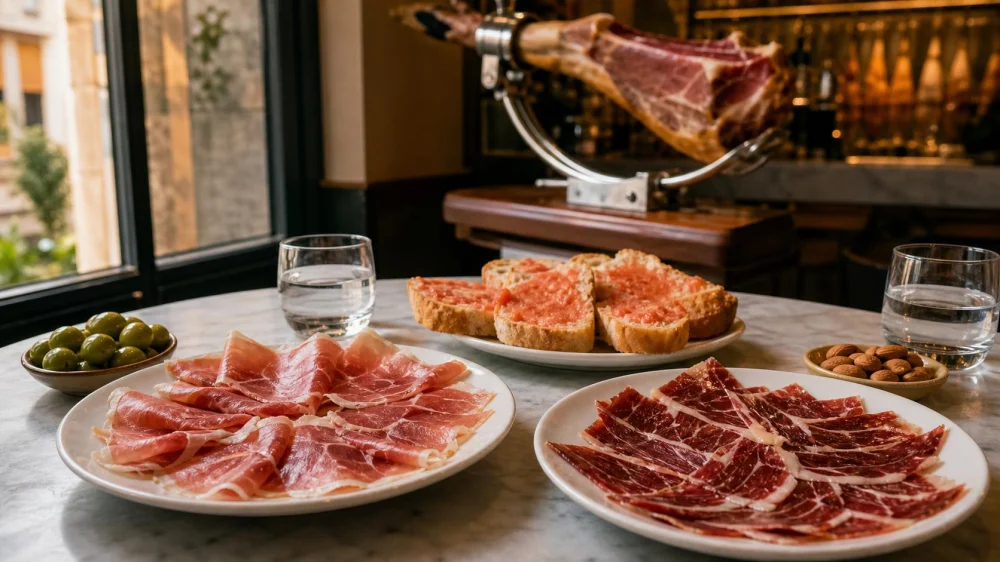
Thin slicing changes how cured ham feels and tastes. A broad translucent slice warms quickly on the tongue, allowing fat to soften and aroma to release. Hand carving from a leg produces slices with natural variation; a slicer can produce consistent thin pieces from a boneless section. Neither method guarantees quality, but the restaurant should handle the ham with care.
Very cold ham can taste firm and muted. A plate served at a moderate room temperature often shows more aroma and a silkier fat texture. That does not mean leaving perishable food unrefrigerated indefinitely. The restaurant manages food safety and should slice or temper the serving according to its procedures. Diners should eat the plate while it is fresh rather than carrying it through a long meal untouched.
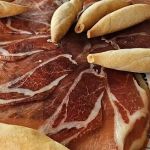
Look for slices that are separated rather than clumped, with a balance of lean and fat appropriate to the cut. Small white crystalline points can occur during maturation and are not automatically salt or spoilage. Aroma, handling, and product information are more useful than one visual feature.
Build the rest of the order
Cured ham works best when the surrounding dishes provide contrast. Tomato-rubbed bread, simple olives, roasted peppers, almonds, mild cheese, or a crisp salad can balance richness and salt. Avoid ordering several salty cured meats, intense cheeses, and salted snacks without a fresh or acidic counterpoint.
Wine, sherry, beer, sparkling water, or other beverages can accompany the plate according to preference. There is no single mandatory pairing. Ask for a local recommendation by describing whether you want something dry, bright, nutty, or alcohol-free. Drink responsibly and follow local age laws.
Serve the premium ham early enough that the palate is fresh. If a heavily spiced or sweet dish arrives first, subtle differences between hams may be harder to notice.
Questions to ask the server
- Is this jamón serrano, jamón ibérico, or paleta ibérica?
- What producer and origin are represented?
- What is the full ibérico category and breed percentage?
- Is the price for a fixed plate or a specific weight?
- How many people is the portion intended to serve as a tapa?
- Is it sliced to order, and is the cut hand-carved or machine-sliced?
- Can we order a tasting of two styles?
- What accompaniments are included?
A knowledgeable answer can be brief. The server does not need to deliver a lecture, but the restaurant should distinguish a generic cured-ham plate from a product carrying a premium regulated name.
Dietary and allergy considerations
Plain cured ham is a pork product, so it does not fit vegetarian, vegan, halal, or kosher diets. Recipes and processing aids can vary; diners with allergies or medically necessary restrictions should ask about the specific product, shared slicing equipment, garnishes, bread, and cross-contact. A plate may arrive with nuts, cheese, tomato bread, or flavored oil even when those items were not prominent in the title.
Cured meat can be high in sodium, and portions should fit individual health guidance. This article does not provide personalized nutrition advice. People with medical restrictions should follow the plan developed with their clinician and ask the restaurant for available ingredient information.
Common ordering mistakes
- Assuming every ibérico is bellota: Ibérico includes multiple regulated production categories.
- Treating serrano as a breed: It is a cured-ham category, not the name of an Iberian pig breed.
- Ignoring paleta: Shoulder has its own character and may offer strong value.
- Ordering too much: Thin, rich cured ham is designed for measured sharing.
- Eating it refrigerator-cold: Give a properly served plate a moment for aroma and texture to open.
- Comparing price without weight: Ask how much product each plate contains.
Frequently asked questions
Is jamón ibérico always the best choice?
No. It offers a distinctive marbled style and includes premium categories, but taste, budget, pairing, and producer quality matter. A good serrano plate can be exactly right for the meal.
What does pata negra mean?
The phrase literally refers to a black hoof and is often used informally for premium ibérico ham, but hoof color alone does not establish the complete regulated category. Look for the full denomination and certification.
Why are the slices so small or irregular?
Hand carving follows the shape of the leg and produces varied slices. Size is less important than thinness, balance of lean and fat, and good handling.
Can I remove the fat?
You can eat according to preference, but the soft fat carries much of the aroma and texture associated with ibérico ham. Try one balanced slice before deciding.
Is Spanish ham the same as prosciutto?
Both are dry-cured hams, but they arise from different traditions, breeds, production standards, climates, and flavor profiles. One is not simply the Spanish or Italian spelling of the other.
Order for the experience you want
Begin with three questions: serrano or ibérico, jamón or paleta, and what exact portion and product are being served. Then decide whether the table wants a generous savory plate or a smaller premium tasting. Thin slicing, appropriate temperature, and balanced accompaniments matter as much as prestigious words. With the terminology clarified, cured ham becomes easier to order—and more interesting to compare one slice at a time.



 New South Orange4.0 (88 reviews)
 La Marcha Tapas Bar4.0 (1193 reviews)
 Le Chalet Basque Restaurant4.0 (366 reviews)
 Spanish Sangria4.0 (493 reviews)
 Linda's Restaurant4.0 (144 reviews)
 Ole Spanish Tapas Restaurant4.0 (37 reviews)
 Creative Spanish Party Menu Ideas for Birthday Celebrations
 Spanish Appetizers with Tapas Inspiration: A Flavorful Guide
 Spanish Mediterranean Family Dinner Recipes for Warm Gatherings
 Spanish Tapas Recipes for Potluck Parties
 The Best Spanish Street Foods You Can Recreate at Home: Flavorful Recipes & Tips
 The Best Spanish Restaurants in Sacramento for Tapas and Mediterranean Flavors