Pan con Tomate Guide: Order, Assemble, and Share
On this page
Quick answer
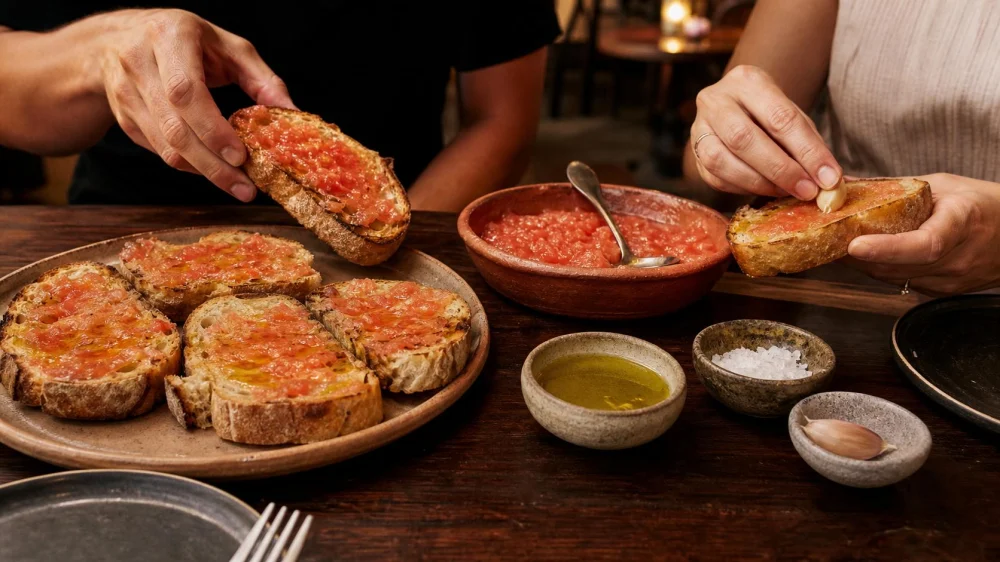
Pan con tomate pairs bread with ripe tomato, olive oil, salt, and sometimes garlic. At a restaurant, ask whether it arrives fully prepared, with tomato already rubbed into toast, or as components for the table to assemble. Confirm the number and size of pieces, garlic intensity, and whether extra toppings such as cured ham, anchovy, or cheese are included.
Eat it soon after assembly for the clearest contrast between crisp or chewy bread and juicy tomato. For allergies or dietary needs, ask about the bread, shared toaster or grill, oil, garlic preparation, toppings, and cross-contact. A simple-looking plate can still contain wheat and other allergens.

Know the core elements
The dish depends on a short ingredient list, so texture and balance stand out. Bread provides structure, tomato adds moisture and acidity, olive oil adds richness, and salt sharpens flavor. Garlic may be rubbed directly on the toast, blended with tomato, offered separately, or omitted.
Restaurants may grate tomato into a pulp, rub a cut tomato on bread, spoon a seasoned mixture on top, or serve the components separately. The result can range from a thin tomato stain to a generous juicy layer.
Do not judge authenticity only by appearance. Pan con tomate and related bread-and-tomato traditions vary by place, household, bread, tomato, season, and service style.

Compare prepared and do-it-yourself service
A fully prepared plate is easy to share and reflects the kitchen's intended seasoning. Eat it promptly because tomato moisture gradually softens toast. Ask whether all pieces have garlic before ordering for a mixed group.
Component service may include toasted bread, a bowl of grated tomato, olive oil, salt, and a garlic clove. Add tomato a spoonful at a time, drizzle oil rather than soaking the bread, and season lightly before tasting.
Use the serving spoon for shared tomato and keep personal utensils out of communal bowls. Do not return a partly eaten slice to the platter.
Choose bread texture and portion
Bread can be thin and crisp, thick and chewy, rustic with large holes, or sliced from a softer loaf. A very open crumb absorbs more tomato and oil; a dense slice stays sturdy longer.
Ask whether the bread is grilled, toasted, or served at room temperature and whether the crust is very hard. Guests with dental issues or chewing difficulty may prefer a less crisp version when available.
Confirm piece count. One long slice, four small toasts, and a basket of table bread create different portions. Decide whether the dish is an opening bite, a side, or a base for other toppings.
Adjust garlic, oil, and salt
Raw garlic rubbed on warm toast can taste stronger than garlic diluted in tomato. Ask for light garlic, garlic on the side, or no garlic when the kitchen can accommodate it. Removing visible garlic after rubbing will not remove its flavor.
Start with less oil and salt when assembling the dish yourself. Tomato and bread should remain recognizable rather than becoming greasy or heavily salted. Add more only after tasting.
Seasoning may already be mixed into the tomato. Ask before automatically adding table salt. Toppings such as cured ham, anchovies, or cheese can add substantial salt and richness.
Check allergens and add-ons
Standard bread commonly contains wheat and may include other grains, seeds, milk, egg, or additives. Ask about ingredients and shared preparation for a food allergy. A gluten-free bread substitution does not by itself resolve toaster, grill, knife, or surface cross-contact.
Plain tomato, oil, salt, and garlic can fit many plant-based preferences, but butter, cheese, fish, cured meat, or a seasoned spread may change that. Confirm whether toppings are optional or built into the house version.
For a severe allergy, explain it directly rather than asking whether the dish is “safe.” Let the restaurant describe its process and decide according to the diner's medical plan.
Pair it with a Spanish meal
Pan con tomate adds fresh acidity and bread texture to a tapas order. Pair it with cured ham, cheese, olives, anchovies, grilled vegetables, seafood, or a simple egg dish. Use it as a contrast to fried croquetas or other rich plates.
Avoid ordering too much bread across the meal unless the table wants it. Crostini-like tapas, sandwiches, table bread, and pan con tomate can become repetitive.
For a group, order enough that each person can have one piece, then add another round if wanted. Freshly assembled pieces usually hold their texture better than a large order waiting on the table.
Frequently asked questions
Is pan con tomate the same as bruschetta?
They are distinct dishes from different culinary traditions, even though both can pair bread, tomato, olive oil, and garlic.
Does it always contain garlic?
No. Garlic use and intensity vary. Ask how the restaurant prepares its version.
Is the tomato diced?
It may be grated, rubbed, crushed, or spooned as a pulp. Diced tomato can appear in some interpretations, but it is not the only format.
Can I order it without oil?
Possibly, especially with component service, but oil may already be mixed in. Ask before ordering.
Should I eat it with a fork?
Most versions can be picked up by hand. Use a knife and fork if the topping is very juicy or the portion is large.
Context and limitations
Bread-and-tomato preparations are strongly associated with Catalan cooking and appear in varied forms across Spain and Spanish restaurants abroad. This guide supports respectful ordering without claiming one bread, tomato method, or garlic level is universal.
Menus, ingredients, portions, translations, and preparation change. Verify the current version with the restaurant. General descriptions cannot establish allergen safety or nutrition for a particular plate.
Next steps
Ask whether the dish comes assembled or in components, how many pieces are included, and whether garlic or toppings are already added. Order it early, assemble one slice lightly if needed, taste before adding more oil or salt, and pair it with one fresh and one savory tapa.


 Barcelona Wine Bar4.0 (1027 reviews)
 Casa Vasca4.0 (1154 reviews)
 Sangarita's Tapas Wine4.0 (446 reviews)
 Café Madrid4.0 (1280 reviews)
 EL CID4.0 (1075 reviews)
 Buen Provecho Good Eats0.0 (0 reviews)
 Spanish Dinner Ideas with Classic Tapas for Authentic Home Dining
 Easy Spanish Rice with Paprika and Herbs: A Flavorful Side Dish
 Traditional Spanish Seafood with Lemon and Garlic – A Flavorful Mediterranean Dish
 Discovering the Most Popular Spanish Tapas Recipes in the US
 How to Make Spanish Piquillos Rellenos de Atún: Tuna Stuffed Peppers
 The Best Spanish Restaurants in Raleigh for Traditional Dishes and Tapas