- - Origins of Pan con Tomate in Spanish Cuisine #origins-catalonia
- - Why Rustic Bread Matters for Authentic Flavor #rustic-bread-importance
- - Step-by-Step Flavor Building Technique #flavor-building
- - Cultural Role in Spanish Breakfast and Tapas #spanish-breakfast-tapas
- - Regional Variations Across Spain #regional-variations
- - Real Travel Story: First Taste in Barcelona #barcelona-story
- - Common Mistakes When Making Tomato Toast #common-mistakes
- - How Rubi Spanish Table Helps Home Cooking #rubi-spanish-table
Origins of Pan con Tomate in Spanish Cuisine
The dish known as pan con tomate is one of the most iconic examples of easy Spanish recipes that rely on simplicity rather than complexity. Originating in Catalonia, this humble dish was created as a practical way to use stale bread and ripe tomatoes in a region where food waste was never an option.
Over time, what began as a rural staple evolved into a national favorite, appearing in homes, cafés, and tapas bars across Spain. Today, it is often served as both breakfast and appetizer, bridging the gap between everyday comfort food and culinary tradition.
The beauty of this dish lies in its minimalism. It doesn’t rely on heavy seasoning or elaborate preparation. Instead, it highlights the natural flavors of ingredients at their peak freshness.

Why Simplicity Became a Cultural Signature
Spanish cuisine, especially in the Mediterranean regions, often emphasizes ingredient quality over technique. Pan con tomate is a perfect reflection of this philosophy—few ingredients, maximum flavor impact.

Why Rustic Bread Matters for Authentic Flavor
The foundation of authentic rustic bread tomato toast is, unsurprisingly, the bread itself. In traditional preparation, thick slices of crusty country bread are lightly toasted or rubbed directly with garlic and tomato.
Soft sandwich bread simply does not work for this dish. It lacks structure, absorbency, and the chewy interior needed to hold olive oil and tomato pulp.
Rustic bread, with its irregular crumb and crispy crust, creates the perfect contrast between crunch and juiciness.
Texture as the Secret Ingredient
The experience of eating pan con tomate is largely textural. The crunch of toasted bread, the softness of ripe tomato, and the richness of olive oil come together in a way that feels both rustic and refined.
Step-by-Step Flavor Building Technique
Making pan con tomate is less about strict measurements and more about layering natural flavors. Even though it is considered one of the simple Mediterranean toast dishes, technique still matters.
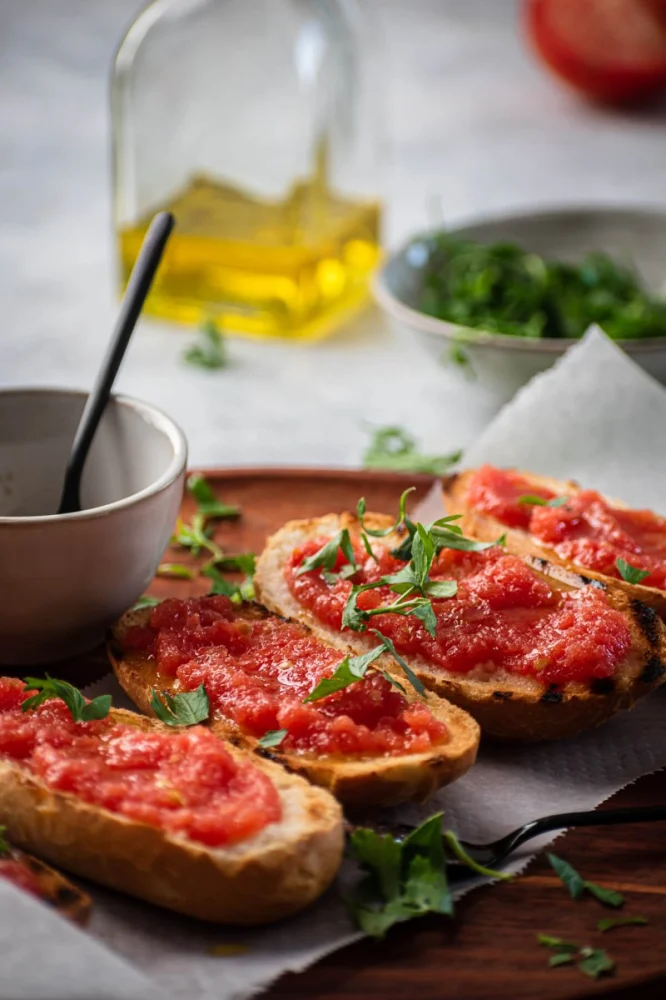
First, the bread is lightly toasted until the surface becomes crisp but not overly hard. Then, a ripe tomato is cut in half and gently rubbed onto the warm bread, allowing its juices to soak into the surface.
Finally, a drizzle of high-quality olive oil and a pinch of sea salt complete the dish.
Why Timing Changes Everything
The best results come when the bread is still slightly warm. This helps absorb tomato juices while preserving structural crunch.
Cultural Role in Spanish Breakfast and Tapas
In Spain, pan con tomate is more than food—it is part of daily rhythm. It appears in both Spanish breakfast ideas and evening tapas culture, depending on the region and household tradition.
In the morning, it is often served with coffee or espresso. At night, it becomes a shared appetizer alongside cheese, cured meats, and wine.
This flexibility is one reason it remains such a beloved dish across generations.
Everyday Spanish Lifestyle Connection
Unlike heavily processed breakfast options, pan con tomate represents a slower, more intentional way of eating. It reflects Mediterranean values of freshness, simplicity, and shared meals.
Regional Variations Across Spain
While the basic concept remains consistent, different regions in Spain have developed unique interpretations of traditional Catalan food.
In some areas, garlic is rubbed onto the bread before tomato. In others, anchovies or cured ham are added on top for extra depth of flavor.
These variations demonstrate how flexible and adaptable the dish has become over time.
Urban vs Rural Interpretations
In rural Catalonia, the dish remains extremely simple. In urban Barcelona cafés, however, it may be served with gourmet olive oils or artisanal bread varieties.
Real Travel Story: First Taste in Barcelona
A traveler visiting Barcelona once described their first encounter with pan con tomate as unexpectedly transformative. Sitting in a small neighborhood café, they ordered it without much expectation.
What arrived was a slice of warm rustic bread, lightly soaked with tomato juice, olive oil glistening on top, and a pinch of sea salt that enhanced every bite.
It wasn’t elaborate, but it was unforgettable. The simplicity made it memorable, especially when paired with a strong Spanish coffee.
Why This Experience Resonates
This story highlights how food doesn’t need complexity to create emotional impact. Sometimes, the simplest dishes leave the strongest impressions.
Common Mistakes When Making Tomato Toast
Even though pan con tomate is considered easy, many people still make mistakes when attempting it outside Spain. One of the most common issues is using underripe tomatoes.
Another mistake is over-toasting the bread, which removes the soft interior texture needed for absorption.
Some also overcomplicate the dish by adding unnecessary ingredients that overpower its natural simplicity.
How to Avoid Flavor Imbalance
The key is restraint. Each ingredient should support, not dominate, the overall flavor profile.
How Rubi Spanish Table Helps Home Cooking
For those wanting to recreate authentic Spanish tapas at home, sourcing the right ingredients is essential. Platforms like Rubi Spanish Table help home cooks find quality olive oils, rustic breads, and traditional Spanish pantry items.
Having access to authentic ingredients can significantly elevate the final result, especially for simple dishes where quality makes all the difference.
Whether you are new to Mediterranean cooking or already familiar with Spanish cuisine, having the right tools and ingredients ensures a more authentic experience.
Why Ingredient Quality Matters More Than Technique
In dishes like pan con tomate, there is nowhere to hide. Every ingredient is exposed, making quality the defining factor in taste success.
Everyday Relevance of a Centuries-Old Dish
Even in 2026, pan con tomate remains relevant because it adapts effortlessly to modern lifestyles. It is quick to prepare, nutritionally balanced, and deeply satisfying.
Its continued popularity proves that traditional recipes can thrive in contemporary kitchens without losing authenticity.
From home kitchens to restaurant menus, this simple combination of bread, tomato, and olive oil continues to define Spanish culinary identity.
 El Pote Español4.0 (450 reviews)
 Solun Tapas Bar4.0 (451 reviews)
 La Bodega4.0 (2595 reviews)
 Olive Tree Monroe Restaurant &Coffee5.0 (6 reviews)
 Sangarita's Tapas Wine4.0 (446 reviews)
 El Agave Bar Lounge Restaurant- YONKERS4.0 (14 reviews)
 How to Make Spanish Piquillos con Atún: Piquillos with Tuna
 The Best Spanish Restaurants in Raleigh for Tapas Nights and Authentic Paella
 How to Make Spanish Chistorra a la Sidra with Sweet and Spicy Notes
 Spanish Dinner Recipes with Traditional Techniques: A Flavorful Experience
 Traditional Spanish Seafood Paella for Holidays
 How to Make Spanish Arroz al Horno con Costillas: Baked Rice with Ribs