
Gambas al Ajillo: Garlic, Oil, Heat, and Table Service
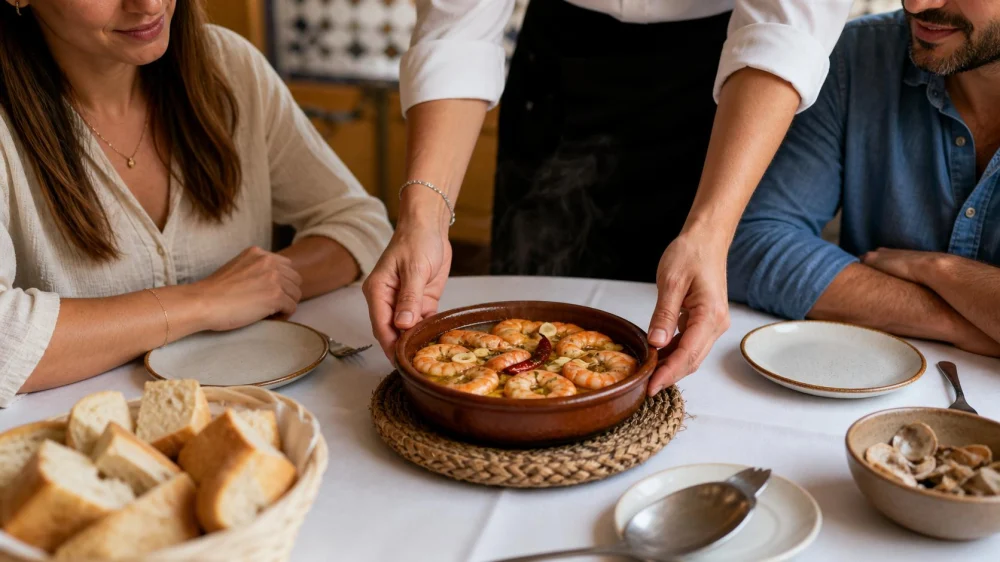
Gambas al ajillo can arrive quietly in a warm dish or audibly sizzling in a small clay cazuela. Shrimp, olive oil, garlic, chile, parsley, and bread form the familiar outline, but shrimp size, shell treatment, garlic color, oil temperature, spice, and service timing change the experience. Ask how the restaurant prepares and presents it before the hot dish reaches the table.
Quick answer
Ask whether the shrimp are shell-on or peeled, how large the portion is, how spicy it is, whether the oil arrives sizzling, and whether bread is included. Let the server place hot cookware and wait for bubbling to settle before serving. Use the shared utensil, keep oil away from the table edge, and communicate shellfish, garlic, gluten, and other allergies directly. Eat promptly so the shrimp do not continue cooking in hot oil.
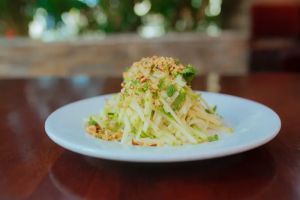
Firefly* Tapas Kitchen & Bar
335 Hughes Center Dr, Las Vegas, NV 89119, USA
Ask about the shrimp
Shrimp may be small and tender, large and meaty, peeled completely, tail-on, or served with more shell. Shell-on preparation can add flavor but requires more handling and a discard plate. Ask before ordering when dexterity, mess, or sharing matters.
Count is less informative than total size and portion. Ask whether the dish is a tapa, ración, or entrée and how many people it usually serves. Shrimp should be cooked through according to the kitchen’s process without becoming tough from prolonged holding.
Do not assume wild, farmed, fresh, frozen, local, or imported from appearance. Ask only if sourcing affects your decision and rely on the restaurant’s current information.

Understand the garlic oil
Garlic may be sliced, minced, crushed, pale and sweet, or deeply toasted. Dark garlic can add bitterness. Chile may be a dried whole pepper, flakes, fresh slices, or infused oil, producing different kinds of heat.
Olive oil carries the aromatics and becomes part of the dish rather than leftover cooking fat. Some restaurants add wine, lemon, paprika, parsley, butter, stock, or another seasoning. Ask what is in the sauce when dietary restrictions matter.
A large pool of oil is traditional in some preparations, but you do not need to consume all of it. Spoon a small amount with shrimp or bread and let excess remain in the serving dish.
Manage heat and hot cookware
A clay or metal dish can remain hot long after visible bubbling stops. Let staff place it on a stable trivet, keep napkins and sleeves clear, and do not touch the handles or rim. Do not slide it across a rotating or crowded table.
Oil can spit when disturbed or when wet food enters. Wait for the server’s cue and lean back while it settles. Keep children and anyone with limited reach away from the hot zone.
Serve shrimp onto a personal plate rather than eating directly over the cazuela. Call staff for a cracked dish, unstable trivet, spill, or burn risk.
Use bread and sides
Bread helps capture garlic oil, but confirm whether it is included or charged separately. Crusty pieces hold texture better than very soft bread. Use a personal piece after transferring oil to your own plate rather than double-dipping into the shared dish.
A tomato salad, green salad, grilled vegetables, potatoes, or another bright side can balance the rich oil. Avoid ordering several equally oily tapas unless the group wants that profile.
For a gluten allergy or celiac disease, removing bread is not enough; ask about preparation, shared surfaces, and any sauce ingredients.
Share the dish cleanly
Place the dish where everyone can reach without crossing hands. One person can serve the first round using the provided spoon or tongs after the oil settles. Take a modest portion so shrimp remain for others.
Provide a separate bowl for shells and tails. Do not place discarded shells back into the garlic oil or on a shared bread plate. Use napkins and wash hands after shell handling.
If one diner has a shellfish allergy, family-style service may create unacceptable cross-contact. Discuss a separate plan with the restaurant rather than relying only on distance across the table.
Check allergens and ingredients
Shrimp are crustacean shellfish, a major allergen. The dish may also involve milk, wheat, fish stock, sulfites in wine, or cross-contact from shared cookware and fryers. Garlic intolerance differs from an immune-mediated allergy but still needs clear communication.
Tell the server the specific allergy and ask the kitchen to check current ingredients and handling. Do not assume removing visible shrimp makes the oil safe; shellfish proteins can remain throughout the dish.
Call emergency services for trouble breathing, throat or facial swelling, collapse, or another severe allergic reaction and follow the person’s emergency plan.
Handle leftovers
Shrimp can overcook during reheating, so order an appropriate portion. If taking leftovers, ask staff to transfer food from the hot serving vessel into a secure container and cool it according to food-safety procedures.
Refrigerate perishable leftovers within two hours, or within one hour above 90°F. Keep the container level and go directly to the destination.
Reheat thoroughly in suitable cookware and avoid repeated heating. Discard shrimp with uncertain storage history, off odor, or signs of spoilage without tasting.
Frequently asked questions
Are gambas al ajillo very spicy?
Not always. Chile type and amount vary; ask for the house heat level.
Can I touch the clay dish?
Assume it is hot. Let staff place and move it, and use the serving utensil.
Is bread included?
Policies vary. Ask whether it comes with the dish and whether there is a charge.
Can someone with shellfish allergy share the oil?
No. The oil has direct shellfish contact and is not a safe separation method.
Next steps
Ask about shrimp size and shell, portion, chile heat, added ingredients, bread, and sizzling service. Clear the table space before arrival, let the oil settle, serve onto personal plates, and eat promptly while the shrimp remain tender.

 Maria's And Mix Kitchen4.0 (47 reviews)
 Las Palmas Deli4.0 (225 reviews)
 Boqueria UES4.0 (2026 reviews)
 Mina's Spanish Kitchen3.0 (297 reviews)
 Sazón Y Pilon Kitchen & Bar4.0 (356 reviews)
 Bocado Tapas Wine Bar4.0 (1681 reviews)
 How to Make Spanish Tarta de Queso: Cheesecake Recipe
 The Best Spanish Restaurants in Tampa for Tapas, Paella, and Mediterranean Cuisine
 The Best Spanish Restaurants in Atlanta, Georgia for Authentic Cuisine
 How to Make Spanish Merluza a la Plancha: Grilled Hake
 Traditional Spanish Bean Stew (Fabada Asturiana) Recipe: A Classic Comfort Dish
 The Best Spanish Restaurants in Phoenix for Gourmet Spanish Cuisine - Rubi Spanish Table