
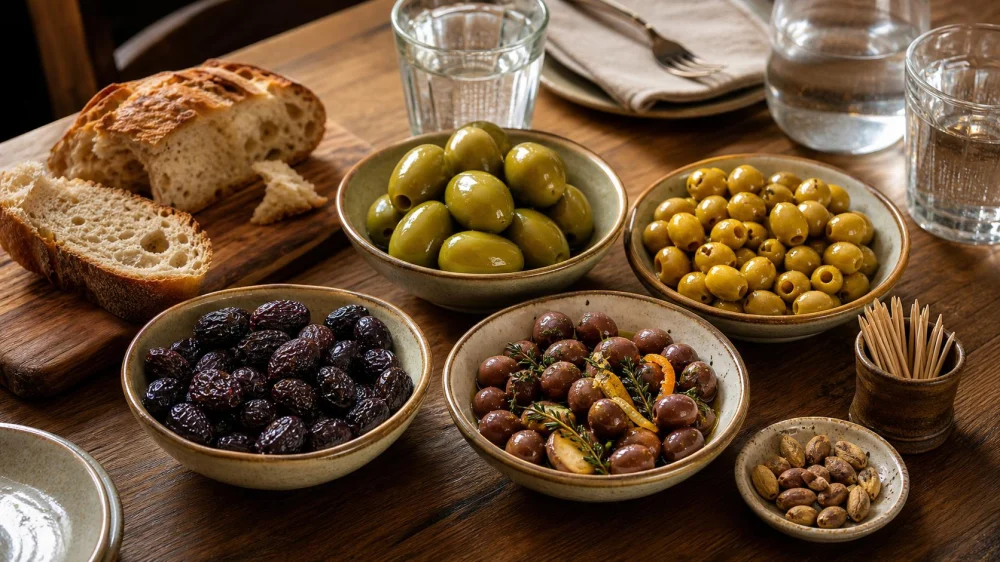
How to Order Olives at a Spanish Restaurant
In this guide
Olives often arrive at a Spanish restaurant before the first ordered dish, but they are not all interchangeable bar snacks. Spain grows many olive varieties, and table olives can be harvested at different stages, cured by different methods, cracked, pitted, stuffed, or dressed with herbs and citrus. Learning a few practical terms makes it easier to choose between a mild green olive, a large meaty one, a wrinkled black style, or a house mix.
Quick answer
Ask whether the olives are a complimentary snack or a charged order, which varieties are included, whether they contain pits, and how they are cured or dressed. Green does not automatically mean unripe in a negative sense, and black does not guarantee a particular flavor or natural color. For a first tasting, order a mixed plate with two or three contrasting styles: one crisp and briny, one large and fleshy, and one softer or more deeply cured. Eat carefully around pits and let the olive's bitterness, salt, acidity, texture, and aromatics guide your preference.
Understand table olives
Fresh olives from the tree are generally too bitter to eat as a snack because of naturally occurring compounds, so table olives undergo processing that reduces bitterness and makes them palatable. Methods vary by region, variety, maturity, and desired style. Water, brine, dry salt, lye followed by washing and brining, fermentation, oxidation, or combinations may be used under controlled production.
A table olive is selected and prepared for direct eating. This differs from an oil olive grown or harvested primarily for pressing, although some varieties serve both purposes. A restaurant may call a bowl “house olives” because it uses a proprietary marinade, not because the olives were grown or cured on site.
Green, turning-color, and black olives
Color often reflects maturity and processing, but it is not a simple flavor scale. Green olives are harvested before full ripeness and can be firm, bright, grassy, bitter, or briny depending on variety and cure. Olives picked as they change color may show pink, purple, or brown tones and a balance between firm green and softer ripe characteristics.
Naturally ripe olives can deepen toward purple or black and may taste rounder or fruitier, but curing remains decisive. Some uniformly black olives are produced through an oxidation process that creates consistent color and mild flavor. That is a valid style, but it is different from a naturally dark, traditionally cured olive. Ask about preparation rather than judging quality from color alone.
Spanish olive names you may see
Manzanilla
Manzanilla is one of the best-known Spanish table-olive names. The fruit is generally medium-sized with a firm, approachable texture and is commonly served green, pitted, or stuffed. Its balanced character makes it a useful baseline for comparing stronger styles.
Gordal
Gordal means “the fat one,” an apt name for a very large, fleshy olive often associated with Seville. Its size and mild-to-moderate flavor make it well suited to stuffing and substantial marinades. A few pieces can feel like a full tapa.
Hojiblanca
Hojiblanca is a dual-purpose variety used for both oil and table olives. Depending on maturity and cure, it can offer a firm bite and a flavor that combines fruitiness, bitterness, and a peppery or almond-like impression. Restaurant preparations vary widely.
Arbequina
Arbequina is small and widely known for olive oil, but it may also appear as a table olive. Its small size means more pit relative to flesh, yet the flavor can be delicate and aromatic. It is better for attentive snacking than for diners who want large pitted pieces.
Other regional names
Menus may feature Campo Real, Aloreña, Aragón, Empeltre, Verdial, or other local styles and protected names. Some names identify a variety, others a place or preparation. Ask what makes the restaurant's selection distinctive instead of trying to infer everything from the word alone.
How curing changes flavor
Curing is as important as variety. Brine-fermented olives may develop acidity and savory complexity. Dry-salt curing can concentrate flavor and create a wrinkled surface. Water-cured or cracked olives can taste fresher but may retain noticeable bitterness. Oxidized styles are often milder and more uniform.
Bitterness is not automatically a flaw. A measured bitter note is part of many traditional olive profiles and can balance fat, salt, and acidity in a meal. Harsh chemical flavor, rancidity, uncontrolled fermentation, or a damaged texture are different issues. Diners new to assertive olives may prefer a milder brined Manzanilla or a large Gordal before trying an intensely dry-cured style.
Marinades add another layer. Garlic, orange or lemon peel, thyme, rosemary, oregano, chile, vinegar, paprika, fennel, and olive oil can make the same base olive taste quite different. Ask whether the bowl is plain, fermented in its serving brine, or dressed after curing.
Pits, fillings, and dressings
Whole olives with pits often retain a satisfying texture, but they require careful eating. Place the entire olive in the mouth only if it is comfortably sized, remove the flesh gently, and place the pit in the dish provided. For a very large olive, bite around the pit while holding it with a pick or fork if the restaurant supplies one.
Pitted olives are convenient for groups and cooking, though processing can soften them or allow brine to penetrate differently. Stuffed versions may contain pimiento, anchovy, almond, garlic, cheese, tuna, or other fillings. A garnish visible at one end does not identify every ingredient in a processed filling, so allergies must be discussed with the restaurant.
Cracked olives have their flesh split before curing so liquid and aromatics move through more readily. They may look irregular by design. Marinated olives can be oily or slippery; use a serving spoon or pick rather than reaching into a communal bowl with fingers.
Choose a portion for the table
A small bowl can satisfy two people before a larger tapas order. For a group, ask whether the serving is measured by weight, bowl, or individual portion. Large Gordal olives occupy more volume than small Arbequinas, so count alone is not a fair comparison.
Olives are salty and flavorful, designed as an accent rather than the meal's only vegetable. If the table also orders cured ham, anchovies, salted almonds, cheese, and briny seafood, choose one olive bowl and add fresh or less salty dishes for balance. A tasting flight works best when each style is separated or identified by the server.
Some restaurants automatically set down olives and bread but charge for them; customs and laws vary. Ask politely if it is unclear. Declining an unopened or untouched serving may be possible under the restaurant's policy, but communicate promptly.
Pair olives with the meal
Crisp green olives can awaken the palate before fried seafood, croquettes, or grilled foods. Large mild olives work with cheeses and cured meats. Dark, dry-cured olives can stand beside stews, roasted vegetables, or robust sauces. Citrus-dressed olives bring brightness to rich dishes, while chile and garlic preparations add intensity.
For beverages, dry sherry, vermouth, wine, beer, sparkling water, and nonalcoholic aperitif-style drinks can all work. Salt and acidity may make a beverage taste different, so sip after an olive rather than relying on a theoretical pairing. Drink responsibly and observe local age laws.
Olives can also bridge courses. A small bowl at the start is enough; replenishing it throughout dessert may blur the progression of flavors. Let the server clear pits and used picks before the table becomes crowded.
What a good serving looks like
Quality is specific to style. A firm green olive should not be judged by the soft texture expected from a ripe dry-cured one. Look for clean aroma, intact flesh appropriate to the preparation, balanced seasoning, and serving liquid free from obvious foreign debris. Natural variation in size and color can signal an artisanal batch rather than a defect.
Cracked skin, wrinkles, or cloudiness are not automatically problems. Fermented brine can be naturally cloudy, dry-cured olives are intentionally wrinkled, and cracked olives are split on purpose. If an olive smells rotten, fizzy in an unexpected way, tastes rancid, or seems mishandled, stop eating and alert the restaurant instead of diagnosing the batch at the table.
Questions to ask
- Which olive varieties are in the bowl?
- Are they green, naturally ripe, dry-cured, or oxidized?
- Are the olives whole, pitted, cracked, or stuffed?
- What is in the filling or marinade?
- Is this serving complimentary or priced separately?
- How large is the portion?
- Can we taste two contrasting styles?
- Is the serving very spicy, bitter, garlicky, or salty?
A useful answer may be sensory rather than technical: “large and mild,” “small and fruity,” or “wrinkled and intense.” That is enough to make a confident choice.
Allergies and dietary needs
Plain olives are plant foods, but fillings and marinades may introduce fish, dairy, nuts, gluten-containing ingredients, or other allergens. Cross-contact can occur through shared utensils, prep containers, and mixed antipasto displays. Tell the restaurant about allergies before accepting a bowl and ask for confirmation from the kitchen.
Olives and brines can contain substantial sodium. People following a medically prescribed sodium limit should use their clinician's guidance and ask whether a plain or smaller portion is available. Rinsing at the restaurant is not a reliable way to quantify sodium reduction.
Frequently asked questions
Are black olives riper than green olives?
They may be, but processing also affects color. Some black olives are naturally ripe; others become uniformly dark through controlled oxidation. Ask about the style.
Why does an olive taste bitter?
Olives naturally contain bitter compounds, and curing reduces them to different degrees. A pleasant bitter note can be intentional. An overwhelmingly harsh taste may simply be a style you do not enjoy.
Can I swallow an olive pit?
No. Pits are hard and can damage teeth or cause choking. Eat attentively and place pits in the provided dish. Supervise children closely and choose pitted olives when appropriate.
Are large olives higher quality?
Size is a varietal and grading characteristic, not a universal measure of flavor or quality. Small Arbequinas and large Gordals offer different experiences.
What is the easiest olive for a beginner?
A mild brined green Manzanilla or fleshy Gordal is often approachable, but preparation matters. Ask for the least bitter, least intense option on that restaurant's menu.
Taste before ranking
The best olive is not simply the largest, darkest, or least bitter. Start with variety, maturity, cure, and preparation, then notice texture and balance. A mixed plate makes those differences clear: crisp beside tender, grassy beside fruity, and plain brine beside aromatic marinade. Ask about pits and fillings, keep portions in proportion to the salty dishes around them, and let the bowl introduce the regional character of the meal.


 Tasty Leia's4.0 (4 reviews)
 Columbia Restaurant - Celebration4.0 (6156 reviews)
 Latin Deli Restaurant5.0 (3 reviews)
 Sandy Restaurant4.0 (1129 reviews)
 Vaca4.0 (885 reviews)
 Jariel's Spanish Restaurant4.0 (59 reviews)
 The Secret to Perfectly Grilled Spanish Chorizo: Tips and Techniques
 Gluten-Free Spanish Recipes That Taste Amazing
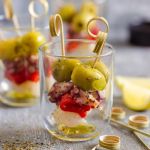 Spanish Appetizers with Tapas Inspiration: A Flavorful Guide
 How to Make Spanish Pollo al Chilindrón con Jamón y Verduras: Chicken with Ham and Peppers
 Refreshing Easy Spanish Sangria with Sparkling Water
 Easy Spanish Sangria for Large Parties: Tips, Recipes, and Serving Ideas