
Spanish Croquetas: Choose Filling, Texture, and Portion
On this page
Quick answer
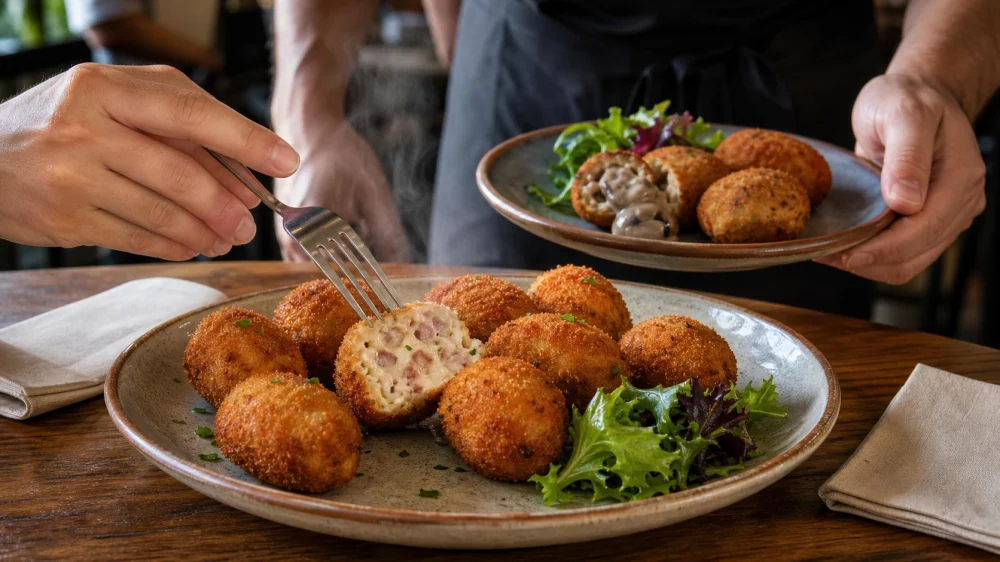
Spanish croquetas are breaded, fried portions built around a thick, creamy béchamel-style base with a finely distributed filling such as jamón, chicken, cod, mushrooms, or cheese. Ask how many pieces come in an order, which filling is used, and whether the center contains dairy or wheat. Let the first piece cool: the interior can be much hotter than the crust.
What a croqueta is
A croqueta is not simply a mashed-potato croquette with a Spanish name. In many Spanish preparations, flour and milk cook into a thick base, the featured ingredient is folded through it, and the chilled mixture is shaped, breaded, and fried. The result should have a crisp shell and soft, cohesive center rather than a loose sauce.
Restaurants may use family recipes, regional inspirations, or modern versions. Shape can be cylindrical, oval, round, or irregular. Size does not determine authenticity. The menu description should tell you the main ingredient, but ask whether it is finely mixed throughout or left in larger pieces when texture matters.
Compare fillings
Jamón croquetas bring salty cured-pork flavour, while chicken versions are usually milder and may use roast meat. Cod can taste more savoury and marine; mushroom gives earthy depth; spinach or cheese can be rich without meat. Some kitchens make a mixed selection, while others serve one flavour per order.
Ask staff to identify mixed pieces before the platter reaches the table. Appearance may not distinguish them after breading. If your group has dietary restrictions, separate varieties with their own serving utensils and do not cut every piece on a shared board. A label or distinct plate is more reliable.
Judge crust and center
The coating should arrive crisp and evenly browned without tasting greasy. A creamy center should hold together when opened but remain tender. Very thick filling may reflect the recipe rather than overcooking, and a pale center is normal for béchamel. Evaluate the advertised style instead of expecting every croqueta to flow dramatically when cut.
Open the first one with a fork and wait for steam to escape. Fried coating cools faster than the center, so a comfortable exterior can hide a scalding interior. If a piece is cold in the middle or the coating seems undercooked, tell staff rather than sampling several to confirm.
Plan a shared portion
Count pieces against diners, not only the menu’s “tapa” or “ración” label. A tapa may be a small taste, while a ración is usually larger, but exact portions vary by restaurant. For four diners who want one each, confirm the count and add another order only if it fits the rest of the meal.
Croquetas are rich, so pair them with vegetables, seafood, salad, or lighter tapas for contrast. Serve them early while the crust is at its best. Use a clean shared utensil and place one piece on each diner’s plate rather than passing a hot platter repeatedly across glasses and small dishes.
Check allergens
Traditional-style croquetas commonly contain wheat, milk, egg, and the featured filling. Breadcrumbs and béchamel create multiple allergen points. Ask about stock, butter, cheese, cured meat, fish, shellfish, nuts, and packaged ingredients, as applicable. A vegetable filling does not automatically make the piece vegan or gluten-free.
Fryers, breading stations, trays, and utensils can create cross-contact. Tell staff the exact allergy before ordering and ask whether the kitchen can manage it. Removing the coating is not a solution because flour and milk are often inside the center. People with celiac disease or serious allergy need restaurant-specific answers.
Handle takeout and reheating
Ask for croquetas in a rigid container with sauce, if any, separated. A small vent may preserve crispness during a short trip, but follow the restaurant’s packaging method. Carry the box level, go directly to the destination, and do not leave fried food in a parked vehicle.
Refrigerate leftovers promptly under current food-safety guidance. Reheat using the restaurant’s instructions and a method that warms the center without burning the crust. Let each piece rest before biting. A microwave can soften breading; an oven or air-circulating method may improve texture when the product and container allow it.
Frequently asked questions
Are Spanish croquetas made with potato?
Many use a béchamel-style base rather than potato, although restaurants can create other recipes. Ask what forms the center instead of inferring from the word “croquette.”
Do croquetas always contain ham?
No. Jamón is common, but chicken, fish, seafood, mushroom, cheese, and vegetable fillings are also popular. Mixed orders need clear identification.
Why are they served so hot?
The dense creamy center retains heat after frying. Split the first piece, allow steam to escape, and test a small portion before eating.
Evidence and limitations
This guide reflects common Spanish restaurant preparation and service, along with broad food-handling and allergen principles. Recipes, breading, filling, fryer use, portions, and reheating instructions differ by kitchen. The restaurant’s current ingredient information and preparation controls are the controlling source for a specific order.
Conclusion and next steps
Choose the filling, confirm the piece count, disclose allergies, and ask how mixed flavours are identified. Serve croquetas promptly, open the first carefully, and let the center cool. For takeout, separate sauces and reheat according to restaurant guidance so the crust and filling recover together.

 Vida4.0 (129 reviews)
 El Quijote4.0 (551 reviews)
 New Beginning Pinchos y Algo Más5.0 (15 reviews)
 Spanish Food Breakfast & Lunch4.0 (41 reviews)
 El Nuevo Capri Corp #23.0 (35 reviews)
 Casa de Raku4.0 (47 reviews)
 Easy Spanish Pan con Tomate with Rustic Bread Recipe Guide
 Traditional Spanish Seafood and Tomato Rice: A Delicious Culinary Experience
 How to Make Spanish Croquetas de Setas y Queso: Mushroom and Cheese Croquettes
 The Secret to Perfectly Grilled Spanish Chorizo: Tips and Techniques
 Spanish Restaurant Meal Pacing: Tapas, Raciones, and Mains
 How to Make Spanish Croquetas de Pollo con Salsa Bechamel: Chicken Croquettes with Cream Sauce