
Gazpacho vs Salmorejo: A Spanish Restaurant Ordering Guide
On this page
- Quick answer
- What the two dishes share
- What to expect from gazpacho
- What to expect from salmorejo
- Compare texture and serving style
- Compare flavor and richness
- Read the garnishes
- Ask dietary and allergen questions
- Consider season and menu context
- Choose a balanced pairing
- How to order respectfully
- Takeout and leftovers
- Quick ordering checklist
- Frequently asked questions
- Next steps
Quick answer
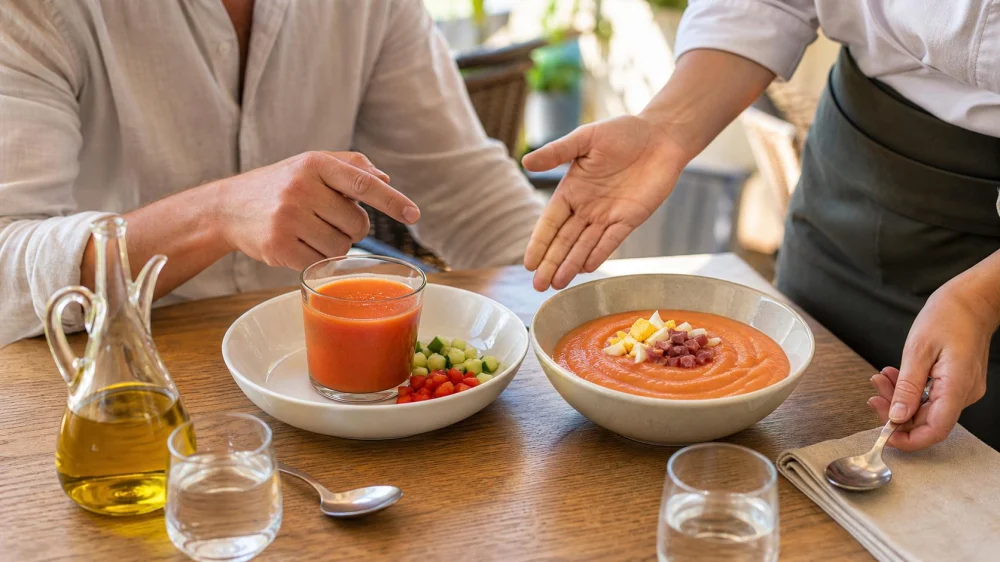
Gazpacho is generally a chilled Andalusian tomato-and-vegetable soup or drink with a light, pourable texture. Salmorejo is a thicker Córdoba specialty built from tomato, bread, olive oil, garlic, and salt, commonly served in a bowl with garnishes such as chopped cured ham and hard-cooked egg.
Choose gazpacho when you want something refreshing, bright, and vegetable-forward. Choose salmorejo when you want a creamy-feeling, spoonable dish with more body and olive-oil richness. Recipes vary by cook, region, season, and restaurant, so ask about ingredients and garnishes when allergies or dietary choices matter.

What the two dishes share
Both dishes are closely associated with Andalusia in southern Spain and are especially appealing in warm weather. Tomato, olive oil, garlic, salt, and a balance of acidity are common, although exact formulas vary.
Neither is simply “cold tomato soup” in the generic sense. Ingredient quality, blending, straining, resting, and serving temperature shape the result. Ripe tomato and olive oil contribute flavor and texture without long cooking.
Restaurants may present traditional versions, family versions, or modern interpretations. A menu description is a starting point, not a complete definition of every regional practice.
Both can arrive as a starter, small plate, cup, bowl, or tasting portion. Confirm portion size if you are building a shared meal.

What to expect from gazpacho
Gazpacho commonly blends tomato with cucumber, pepper, garlic, olive oil, vinegar, salt, and water. Some recipes include bread; others use little or none. The mixture may be strained for smoothness or left with more texture.
Its consistency can range from drinkable to lightly spoonable. In Spain it may be served in a glass, cup, or bowl. A restaurant might offer diced vegetables or croutons separately so diners can adjust texture.
The flavor is usually fresh, tangy, and savory rather than sweet. Cucumber and pepper may be noticeable, while garlic and vinegar vary in intensity. A very cold serving temperature can mute aroma, so the flavor may open as it sits briefly.
Some menus use “gazpacho” for fruit, beet, cherry, melon, or other chilled soups. These can be creative dishes but should be read by their listed ingredients rather than assumed to match classic tomato gazpacho.
What to expect from salmorejo
Salmorejo is strongly associated with Córdoba. It usually combines ripe tomato, bread, extra-virgin olive oil, garlic, and salt into a thick, smooth emulsion. Its texture can resemble a silky purée or dip-like soup.
Bread gives salmorejo body, while generous olive oil helps create a creamy sensation without requiring dairy. It is typically eaten with a spoon rather than drunk.
Traditional garnishes often include chopped jamón and hard-cooked egg. The base can be plant-based, but the completed dish may not be vegetarian or vegan because of its garnish.
Restaurants may serve salmorejo beneath vegetables, seafood, cheese, or other toppings. A composed plate can function as a substantial starter rather than a simple soup course.
Compare texture and serving style
Texture is the easiest distinction for many diners. Gazpacho tends to flow when poured and may be sipped. Salmorejo usually holds a spoon trail and supports toppings on its surface.
Gazpacho’s vegetable and water content makes it feel lighter. Salmorejo’s bread-and-oil emulsion makes it denser and more coating. “Thick” does not mean hot or heavy in the same way as a cream soup.
If the restaurant offers a tasting size, order both and compare them side by side. Notice viscosity, aroma, acidity, garlic, and olive-oil finish before adding anything.
Do not judge authenticity by thickness alone. Restaurant technique and ripe tomato water content can shift consistency without changing the dish’s identity.
Compare flavor and richness
Gazpacho often highlights the contrast among tomato, cucumber, pepper, and vinegar. It can taste grassy, crisp, and refreshing. Garlic may be restrained or assertive.
Salmorejo concentrates tomato and olive oil. Bread softens acidity and creates a rounder, richer mouthfeel. The finish may be fruity, peppery, or slightly bitter depending on the olive oil.
Salt and temperature affect both dishes. A chilled soup can taste different after a few minutes, but it should remain safely cold and should not be left out for an extended period.
Ask which dish is more acidic or garlicky that day. Staff who have tasted the batch can give a more useful answer than a general definition.
Read the garnishes
Gazpacho may come with diced cucumber, pepper, onion, tomato, croutons, herbs, or a drizzle of olive oil. Garnishes add crunch and allow the diner to change each spoonful.
Salmorejo frequently includes jamón and egg. Other versions may add tuna, sardine, smoked fish, vegetables, fruit, or cheese. These toppings can change allergens, sodium, and the role of the dish in a meal.
Ask whether garnish is mixed in, placed on top, or served separately. If avoiding an ingredient, request omission before the dish is assembled and ask about cross-contact.
Taste first. Extra vinegar, salt, or olive oil may be available, but the kitchen has already balanced the batch.
Ask dietary and allergen questions
Salmorejo normally contains wheat bread, so it is not gluten-free unless the restaurant uses a verified alternative and manages cross-contact. Some gazpacho contains bread as well; never assume it is gluten-free.
The puréed base is often dairy-free, but modern recipes can include dairy, cheese, or cream. Ask about the actual recipe. A creamy texture does not prove dairy, and a red color does not prove its absence.
Common topping concerns include egg, wheat croutons, fish, shellfish, dairy, and pork. Kitchen equipment may be shared with nuts or other allergens. Tell staff about an allergy rather than simply requesting “no garnish.”
For vegetarian or vegan diners, ask about stock, toppings, and cross-contact. The base may fit while jamón, egg, anchovy, or another finishing ingredient does not.
Consider season and menu context
Both dishes are strongly linked to warm weather and ripe tomatoes. A restaurant may offer them seasonally, as a special, or in smaller portions outside summer.
Read where the dish appears on the menu. A cup under soups may be a light starter. A plated salmorejo with seafood or ham may be closer to a composed first course.
A tasting menu may reinterpret the dish as a sauce, espuma, frozen element, or small garnish. Ask the server how it is served if you want the classic bowl experience.
Availability is not a measure of whether a Spanish restaurant is authentic. Regional focus and season determine what belongs on its menu.
Choose a balanced pairing
Gazpacho pairs well with grilled vegetables, seafood, tortilla española, simple fish, and tapas that add texture without repeating heavy sauces. Its acidity can refresh the palate.
Salmorejo can anchor a richer starter course. Pair it with lighter vegetables, grilled fish, or a simple salad rather than several bread-heavy or fried plates.
If sharing, order one chilled dish, one vegetable plate, one protein or legume dish, and bread only as needed. This approach creates contrast in temperature, texture, and richness.
For beverages, ask the restaurant for a regional suggestion, including nonalcoholic options. Water remains useful alongside salty garnishes.
How to order respectfully
Ask, “Is your gazpacho drinkable or spoonable?” and “How thick is the salmorejo, and what comes on top?” These questions clarify the restaurant’s version without suggesting there is only one correct recipe.
Pronunciation does not need to be perfect. Pointing to the menu and using the full dish name is fine. Avoid calling salmorejo “Spanish tomato hummus” or gazpacho “salsa”; comparisons can help privately but may obscure their culinary identities.
Confirm portion size and whether the dish is meant to be shared. Small cups can be individual; a large plated salmorejo may serve the table.
If you dislike raw garlic, cucumber, pepper, vinegar, or thick purées, say so. Staff can steer you to the better choice.
Takeout and leftovers
Ask the restaurant to package garnishes separately when possible so they stay crisp. Keep chilled soup cold and refrigerate it promptly according to food-safety guidance.
Gazpacho can separate during transport. Stir or shake only if the container is securely closed and the restaurant recommends it. Salmorejo may thicken further when cold.
Do not leave either dish in a hot car. Consume leftovers within the restaurant’s guidance and discard food that has been held unsafely or shows spoilage.
Transfer takeout into clean serving ware rather than eating from a leaking or damaged container.
Quick ordering checklist
- Choose light and pourable gazpacho or thick and spoonable salmorejo.
- Ask whether gazpacho contains bread.
- Confirm salmorejo toppings, especially jamón and egg.
- Tell staff about wheat, egg, dairy, fish, or other allergies.
- Ask about garlic, vinegar, cucumber, and pepper intensity.
- Confirm portion size and serving format.
- Taste before adding salt, vinegar, or oil.
- Keep takeout cold and package garnishes separately.
Frequently asked questions
Is salmorejo a type of gazpacho?
They are related chilled Andalusian tomato dishes, but restaurants and cooks generally treat salmorejo as its own preparation with thicker texture, bread, olive oil, and characteristic garnishes.
Is gazpacho always vegan?
No. Many versions are plant-based, but bread, dairy, stock, seafood, egg, or meat garnishes can appear. Ask about the recipe and cross-contact.
Why is salmorejo creamy if it has no cream?
Bread, tomato, and olive oil can form a smooth emulsion that feels creamy. Modern restaurant versions may still add dairy, so confirm ingredients.
Which dish is more filling?
Salmorejo is generally more substantial because of bread, olive oil, and toppings. Portion and recipe determine the actual experience.
Are both dishes served ice-cold?
They are served chilled, but exact temperature varies. Extremely cold service can mute aroma, while food-safety controls still require proper cold holding.
Next steps
Read the menu description, decide whether you want light or rich texture, and ask about bread and toppings. If both are available, order small portions to compare. Build the rest of the meal around contrast rather than ordering several dishes with the same richness.
Recipes and customs vary across Spain and among restaurants. Treat staff descriptions as the best guide to the version being served.



 Barcelona Restaurant and Bar4.0 (1979 reviews)
 Los Munchies4.0 (28 reviews)
 Boqueria W40th4.0 (2909 reviews)
 Tapas Barcelona4.0 (1110 reviews)
 Laberintos De Pasion Restaurant4.0 (117 reviews)
 Romeos Latin Grill3.0 (11 reviews)
 How to Make Spanish Pimientos Rellenos de Verduras y Queso: A Step-by-Step Guide
 How to Make Spanish Piquillos Rellenos de Bacalao: Stuffed Piquillo Peppers with Cod
 Easy Spanish Rice with Chicken Thighs | Rubi Spanish Table
 How to Make Spanish Gazpacho Andaluz: Chilled Tomato Soup
 How to Make Spanish Chistorra con Huevos: Sausage with Eggs
 The Best Spanish Restaurants in Orlando