
Spanish Croquetas Guide: Fillings, Texture, and Sharing
On this page
Quick answer
Spanish croquetas are usually small breaded and fried portions with a creamy interior bound by a thick sauce and flavored with ham, chicken, cod, mushrooms, cheese, spinach, shellfish, or another filling. Ask which fillings are available, how many pieces come in an order, whether a mixed plate is possible, and whether the center is mild, salty, rich, or strongly flavored.
Let the first croqueta cool before biting: the crisp shell can hide a very hot center. If allergies or dietary restrictions matter, ask about the filling, dairy, wheat, egg, seafood, meat stock, breading, frying oil, and shared equipment. Appearance alone cannot identify the recipe.

Understand the basic texture
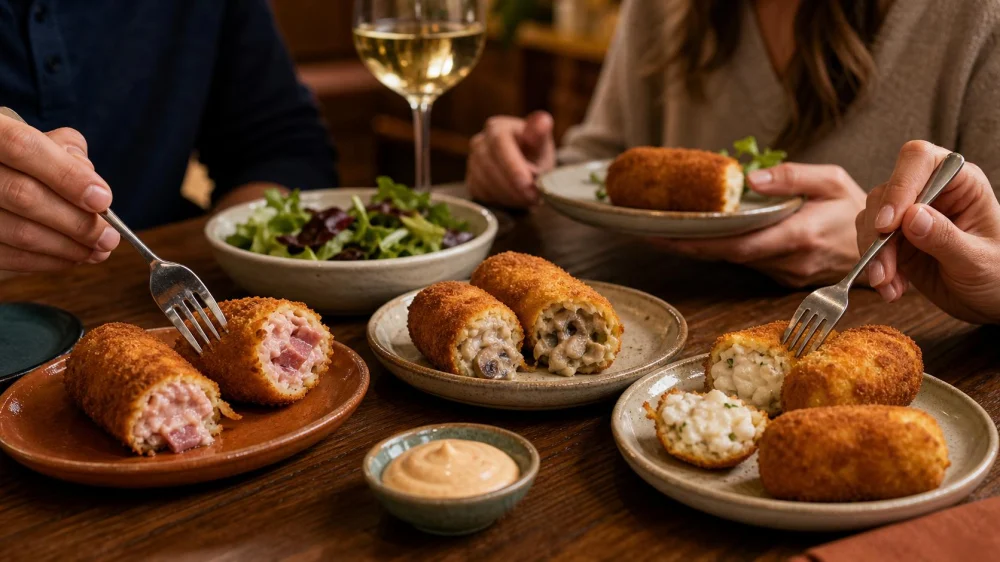
A typical croqueta contrasts a crisp breadcrumb exterior with a soft, creamy center. The interior may be smooth or contain small pieces of the featured ingredient. It is not simply a mashed-potato croquette, though other cuisines and individual menus use similar words for different preparations.
Restaurants shape them as cylinders, ovals, balls, or larger portions. A thin delicate crust can feel light, while a heavier breading creates more crunch. Neither shape nor color proves the filling.
Ask whether the order is freshly fried and how the kitchen intends the center to feel. The filling should be set enough to hold but often remains much softer than the shell.

Bistro Basque
MilfordSouth Central Connecticut Planning RegionConnecticut
13/17 River St, Milford, CT 06460, USA
Compare common fillings
Jamón croquetas often feature cured ham and a savory, salty profile. Chicken versions can be gentle or richly seasoned. Cod or other fish versions may be briny; shellfish versions can be more aromatic and may include visible pieces.
Mushroom, spinach, cheese, or vegetable fillings may be offered, but a vegetable name does not automatically mean vegetarian or vegan. The base can include milk, butter, stock, egg, cheese, or animal fat.
Chef specials may use oxtail, chorizo, squid ink, blue cheese, or seasonal ingredients. Ask whether a mixed order is labeled or arranged in a predictable pattern so guests do not confuse fillings.
Ask about size, count, and mixed orders
Tapas portions vary. Confirm the number and approximate size before deciding how many plates the table needs. An order of three large croquetas feeds a group differently from six bite-size pieces.
For a mixed plate, ask whether the kitchen can identify each filling and whether the pieces use the same breading and fryer. If a guest cannot eat one filling, a mixed platter may create confusion or contact even when pieces look separate.
Order a first round for the group, then add more if service allows. Croquetas are best enjoyed hot and crisp; ordering too many at once can leave the last pieces cool and softened.
Check ingredients and allergens
Common components can include milk, butter, wheat flour, breadcrumbs, egg, meat, fish, shellfish, and cheese. Recipes differ. State the allergen directly and ask about the entire filling, coating, garnish, sauce, frying oil, and shared preparation.
For vegetarian dining, ask about stock, ham or meat bits, animal fat, and fryer sharing. For vegan dining, also ask about the creamy base, egg wash, and breading. “Mushroom” describes a flavor, not the whole recipe.
A restaurant may not be able to eliminate cross-contact or change a prepared batch. Use the kitchen's description and the diner's medical plan; do not taste-test an uncertain croqueta to identify it.
Serve and eat them carefully
When the plate arrives, wait briefly and test one piece. Cut it with a fork to release steam and expose the center, especially for children or anyone sensitive to heat. Keep the plate away from the table edge.
Use the serving utensil to move a croqueta to your plate. If pieces have different fillings, maintain the arrangement and do not return a cut piece to the shared plate.
Eat sauce as a complement, not an identification method. Aioli, tomato sauce, pepper sauce, or another garnish can add allergens and strong flavor; ask what it is before dipping.
Build a balanced tapas order
Croquetas add fried richness and soft texture. Balance them with marinated vegetables, a tomato dish, grilled seafood or meat, a salad, or another fresh or acidic plate. Avoid choosing several fried tapas unless the group wants a deliberately rich meal.
Contrast fillings too. A salty ham croqueta can pair with a vegetable plate, while a mild mushroom version can sit beside a more intense seafood or cured-meat dish.
Tell the server the party size, appetite, dietary needs, and whether the table wants a snack or full meal. The server can help pace hot dishes so they arrive at their intended texture.
Frequently asked questions
Are Spanish croquetas made from potatoes?
Many Spanish restaurant versions use a thick creamy sauce rather than potato as the base. Ask the restaurant because recipes and menu terminology vary.
Are jamón croquetas very salty?
Cured ham contributes saltiness, but intensity depends on the recipe and amount. Ask and order a small portion if unsure.
Can croquetas be gluten-free?
Some special recipes may be, but traditional-style filling and breading commonly use wheat. Shared fryers and equipment also matter. Confirm every component.
Can I get several fillings in one order?
Some restaurants offer mixed plates; others serve one flavor per order. Ask how pieces will be identified.
Are croquetas a side dish?
They can be a tapa, appetizer, bar snack, or part of a shared meal. Portion and menu context determine the role.
Context and limitations
Croquetas in Spain reflect home cooking, bars, restaurants, regional preferences, and creative kitchens. This guide describes common ordering patterns without defining one filling, shape, or technique as universally authentic.
Menus, translations, prices, ingredients, fryer practices, and serving counts change. Verify current details with the specific restaurant. General descriptions cannot establish allergen safety or nutrition for a particular order.
Next steps
Ask which fillings are available today, how many pieces come in each order, and whether the plate can be mixed and labeled. Choose one familiar and one new flavor, add a fresh contrasting tapa, cut the first croqueta to release heat, and order a second round only if the group still wants more.

 Cacique Restaurant4.0 (1143 reviews)
 Chateau of Spain4.0 (2098 reviews)
 Nano's NJ4.0 (96 reviews)
 Don Julio Restaurant 33.0 (26 reviews)
 Sala Astoria4.0 (333 reviews)
 Socarrat Paella Bar - Chelsea4.0 (1658 reviews)
 Spanish Rice Recipe with Saffron and Garlic
 Discovering Spanish Cheeses and How to Pair Them with Wine and Tapas
 How to Make Spanish Tarta de Almendra y Chocolate: Almond and Chocolate Cake
 Authentic Spanish Shrimp and Rice Skillet Recipe for Flavorful Meals
 Spanish Mediterranean Cooking Recipes with Rice
 How to Make Spanish Churros con Azúcar y Canela: Cinnamon Sugar Fried Dough Recipe