
Spanish Flan vs Crema Catalana: Texture and Caramel
Table of contents
Quick answer: Spanish flan is typically a smooth, sliceable custard unmolded with liquid caramel sauce. Crema catalana is usually served in its shallow dish, with a softer cream beneath a thin caramelized sugar crust. Choose flan for a cool, uniform custard and flowing caramel; choose crema catalana for the contrast between a brittle top and creamy base. Restaurant recipes and flavorings vary.

Compare the desserts at a glance
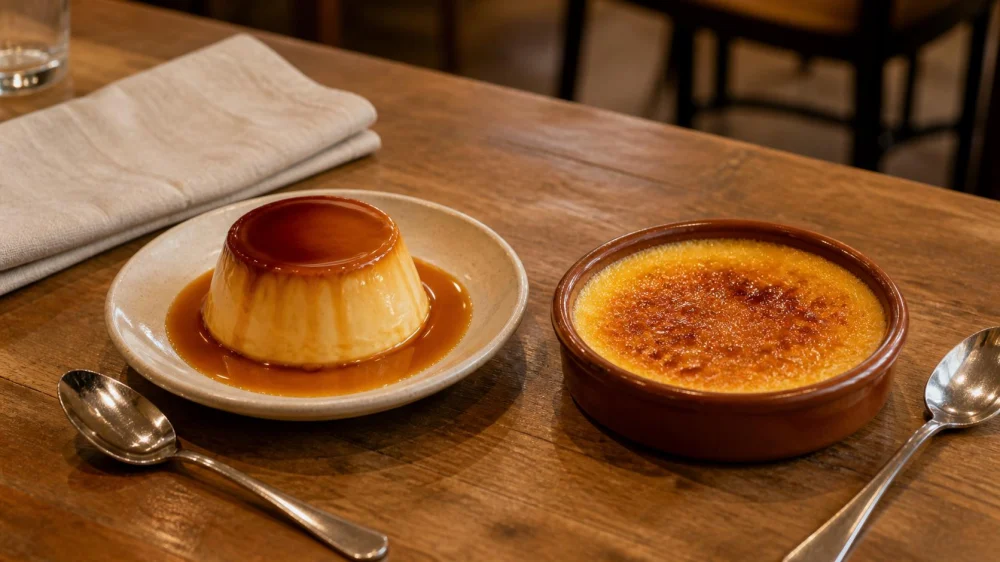
Both combine dairy, egg, sugar, and caramel, but differ in structure. Flan holds its shape on a plate, with mold caramel becoming sauce. Crema catalana stays in a shallow dish, with sugar caramelized on the surface.
- Flan: smooth, cohesive, gently springy, and surrounded by caramel syrup.
- Crema catalana: spoonable cream under a thin, crisp, freshly caramelized top.
- Flan experience: consistent bites that combine custard and sauce.
- Crema catalana experience: a deliberate contrast of crackle, cream, warmth at the surface, and cool filling below.
Appearance is not decisive. Dark caramel may be pleasantly bittersweet or overly bitter; a pale top can still snap. Recipe, holding time, and temperature shape the result.
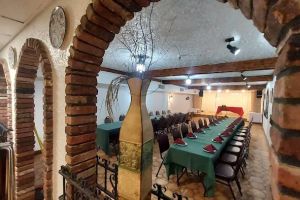
Meson Español
West New YorkHudson CountyNew Jersey
5700 John F. Kennedy Blvd W, West New York, NJ 07093, USA
How each custard sets
Flan is commonly cooked gently in a mold, often with surrounding water. Egg proteins create a custard that can be chilled and unmolded. Too much heat can make it coarse or bubbly. Kitchens may use large or individual molds.
Crema catalana is commonly thickened in a pan with yolks and starch, portioned into shallow dishes, and chilled. It remains spoonable, while the broad surface holds a thin caramelized sugar layer.
These are typical patterns, not rules for every restaurant. Modern recipes may adjust dairy, starch, egg ratios, flavorings, equipment, or presentation. Ask the server how the house version is made if a particular texture matters to you.
Sauce versus crackled caramel
Flan's caramel begins as cooked sugar in the mold. As the custard rests, some caramel dissolves into a glossy sauce. Each spoonful can include soft custard and flowing caramel, with no hard shell to break. The balance can range from lightly sweet to deeply toasted.
Crema catalana's sugar topping is caramelized on the surface. The best-known pleasure is the first tap of the spoon through a brittle layer into cool cream. That texture is time-sensitive: moisture from the filling and air gradually softens the crust. If the dessert waits too long after caramelizing, the top may become tacky rather than crisp.
Flan is usually simpler to divide. Crema catalana can be shared, but the first crack changes the top for everyone else. Individual portions preserve the contrast.
Choose for flavor, texture, and timing
Ask three questions: Is the flan dense or very delicate? Is the crema catalana top caramelized to order? What flavorings does the kitchen use? Citrus peel and warm spices are often associated with crema catalana, while flan recipes may emphasize vanilla, caramel, dairy, or other house flavors. The menu description should guide the specific order.
Choose flan if you prefer a plated dessert with a clean custard shape, soft texture throughout, and caramel sauce. Choose crema catalana if you enjoy a spoon dessert with a crisp top and want the sensory contrast of breaking it. If the table is undecided, order one of each and taste them before combining bites or adding coffee.
Consider the rest of the meal and ask about portion size rather than assuming one dessert serves one person.
Ask about ingredients and handling
Both desserts commonly contain milk and egg. Recipes may also include cream, starch, citrus, cinnamon, vanilla, nuts, alcohol, or garnishes, and kitchens may use shared equipment. Tell the restaurant about allergies before ordering and ask about the complete recipe, garnish, and cross-contact. Do not assume that a gluten-free-looking custard is suitable without confirmation.
Custards require controlled cooking, cooling, storage, and service. Diners cannot verify those controls from appearance alone. If a dessert arrives unexpectedly warm throughout, has an unusual odor, or appears mishandled, pause and ask the restaurant rather than trying to diagnose safety by taste.
Frequently asked questions
Is crema catalana the same as crème brûlée?
They share the idea of cream beneath caramelized sugar, but traditional recipes, thickening methods, flavor profiles, dish depth, and regional identity differ. Ask how the house makes its version.
Why does flan sometimes have tiny holes?
Small bubbles can form from mixing or cooking conditions. Texture matters more than a perfectly uniform appearance; excessive heat may make a custard coarser.
Which dessert is sweeter?
There is no universal answer. Sugar in the base, caramel darkness, portion size, and garnish all affect perceived sweetness.
Can either dessert be made dairy-free or egg-free?
Alternative recipes exist, but they differ from the standard custard structure. Confirm ingredients and cross-contact with the restaurant instead of inferring from the name.
Next steps
Ask how the two house desserts differ in texture, flavoring, portion, and preparation timing. Order according to the contrast you want: flowing caramel and a unified custard, or a brittle top over spoonable cream. If comparing both, taste each plain first, note the caramel character and texture, and use those observations to guide the next order.


 Made Kitchen & Cocktails4.0 (579 reviews)
 Gabi James4.0 (327 reviews)
 Spanish River Grill & Wine Bar4.0 (179 reviews)
 Sangria 714.0 (1123 reviews)
 Condado4.0 (37 reviews)
 Delia Restaurant Inc4.0 (38 reviews)
 How to Make Spanish Merluza a la Vasca con Gambas: Basque-style Hake with Shrimp
 How to Make Spanish Merluza a la Vasca: Basque-style Hake
 A Beginner’s Guide to Cooking Spanish Tortilla de Patatas
 The Best Spanish Restaurants in Detroit for Family Dining Experiences
 Spanish Tapas Recipes for Special Celebrations Made Easy
 Traditional Spanish Seafood with Homemade Sofrito