Pintxos vs Tapas: How to Order and Share Each Style
On this page
Quick answer
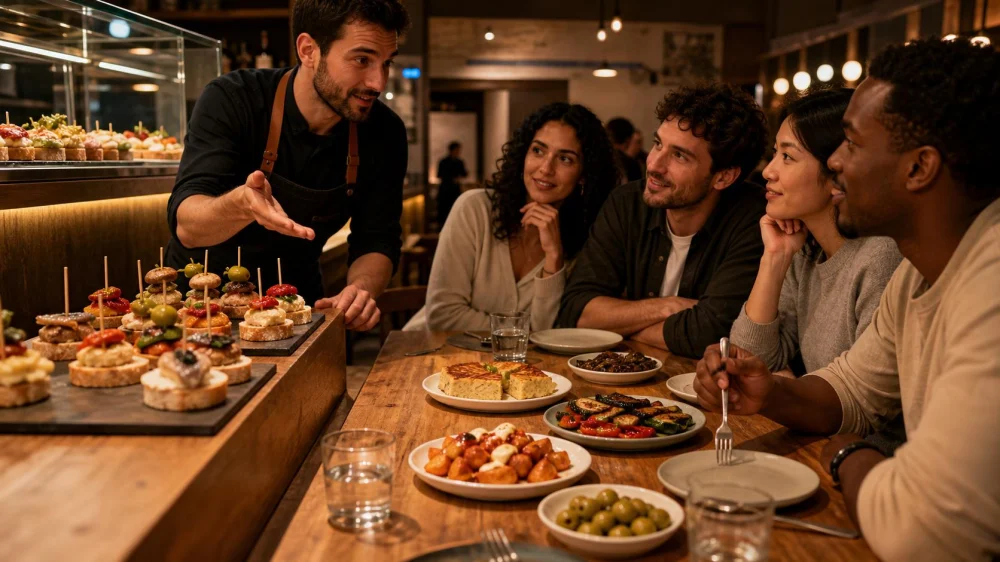
Tapas are small portions served across Spain in many formats, from a simple snack to a shared hot dish. Pintxos are especially associated with the Basque Country and are often individual bites displayed at a bar, though modern pintxos may be cooked to order and need no bread or skewer. In a U.S. restaurant, use the menu's portion notes and ask how each item is served instead of relying on the label alone.
A tapa is a small serving of food, while a pintxo is a small Basque-style bite or miniature dish. The categories overlap, and restaurants adapt both terms to local service styles.
What the terms mean in context
Tapas: The word covers a broad Spanish custom of eating small portions, often socially and sometimes across several bars. A tapa may be cold or hot, plated individually or shared, and simple or elaborate. The serving may accompany a drink, but diners should not assume it is free.
Pintxos: These are strongly connected with Basque bar culture, especially places such as Bilbao and Donostia-San Sebastián. Traditional examples may sit on bread and be held with a skewer, but contemporary pintxos also include composed one- or two-bite creations and hot items ordered from the kitchen.
The spelling pintxo reflects Basque usage; pincho is the Spanish spelling. Menus may use either.
Rachells La zacualpeñita
New BedfordBristol CountyMassachusetts
804 Brock Ave, New Bedford, MA 02744, USA
How U.S. restaurants may use the labels
A Spanish restaurant in the United States may organize all small plates under “tapas,” reserve “pintxos” for single bites, or use the words as cultural cues rather than strict portion categories. The most reliable clues are:
- whether the price is per piece, per person, or per plate;
- whether the item is displayed or cooked to order;
- how many pieces arrive;
- whether the dish is intended for sharing;
- whether bread, utensils, or a serving spoon is needed.
Ask one focused question: “How many people does this portion usually serve?” That prevents both under-ordering and an overcrowded table.
A practical ordering method
- Start small. Choose two or three items for the table, then add more after seeing portion size and pacing.
- Mix service styles. Pair a ready cold bite with a hot kitchen item so everything does not arrive at once.
- Vary ingredients. Avoid ordering several plates centered on the same cured meat, cheese, potato, or fried preparation.
- Clarify individual bites. If one pintxo equals one piece, order enough for everyone who wants to taste it.
- Track what you select. In a display-bar format, follow the restaurant's system for plates, skewers, tickets, or payment; do not assume a custom from another venue applies.
Build a balanced small-plate meal
For a group, select across roles rather than collecting only favorites:
- one vegetable or salad-style item;
- one seafood, meat, egg, or legume-based bite;
- one starch such as bread or potatoes;
- one contrasting hot specialty if appetites support it.
Best for: diners who enjoy sharing, comparing flavors, and ordering in rounds. Not ideal for: groups with severe allergies, strict individual portions, or difficulty tracking shared dishes. In those cases, ask for separate plates and clear ingredient guidance.
Cultural, dietary, and service notes
Pintxos and tapas are not a single recipe or fixed restaurant format. Avoid using the presence of a toothpick, a Spanish name, or a small portion as the only test of authenticity. Region, venue, chef, and social custom all shape the experience.
For allergies, ask about the complete preparation. Small bites can contain or contact wheat, dairy, eggs, fish, shellfish, nuts, sesame, or other allergens through bread, sauces, shared fryers, serving utensils, and display surfaces. Do not infer safety from appearance.
Evidence note: Spain's official tourism site describes tapas as a countrywide social custom and pintxos as especially associated with the Basque Country, including miniature cuisine displayed in many bars. Its tapas overview and Bilbao pintxo guide provide cultural context. Individual U.S. restaurants set their own menus, prices, and service rules.
Frequently asked questions
Does every pintxo have bread and a toothpick?
No. Those are familiar traditional formats, but modern pintxos can be plated, spooned, or cooked to order without either.
Are tapas always shared?
No. Some are individual snacks and others are larger small plates. Ask about the portion and number of pieces.
Do toothpicks determine the bill?
Some venues have used skewers as a counting system, but practices vary. Follow the restaurant's stated process.
Can tapas replace dinner?
Yes, several varied small plates can form a meal. Order in rounds so the group can adjust for portion size and appetite.
Next steps
Read the menu for per-piece and sharing clues, ask how many diners each plate serves, and order one varied first round. Let the restaurant's service method guide you. The best experience comes from pacing, contrast, and conversation rather than trying to enforce one universal definition.
 Sabor Doña Eda5.0 (4 reviews)
 Prado Restaurant4.0 (279 reviews)
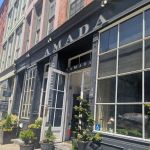 Amada Philadelphia4.0 (2264 reviews)
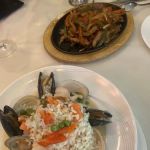 Tequila Bistro4.0 (244 reviews)
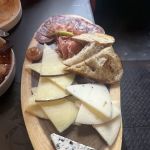 Boqueria UES4.0 (2026 reviews)
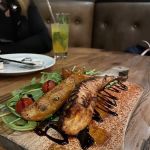 La Taberna Steak & Tapas Bar4.0 (375 reviews)
 How to Make Spanish Tarta de Manzana y Canela: Apple Cinnamon Cake
 Easy Spanish Rice with Saffron Flavor
 How to Make Spanish Pollo a la Cerveza con Champiñones: Beer-Braised Chicken with Mushrooms
 The Best Spanish Restaurants in Detroit for Family Dining Experiences
 How to Make Spanish Arroz al Horno: Baked Rice with Meat and Vegetables
 How to Make Spanish Tarta de Queso: Cheesecake Recipe