
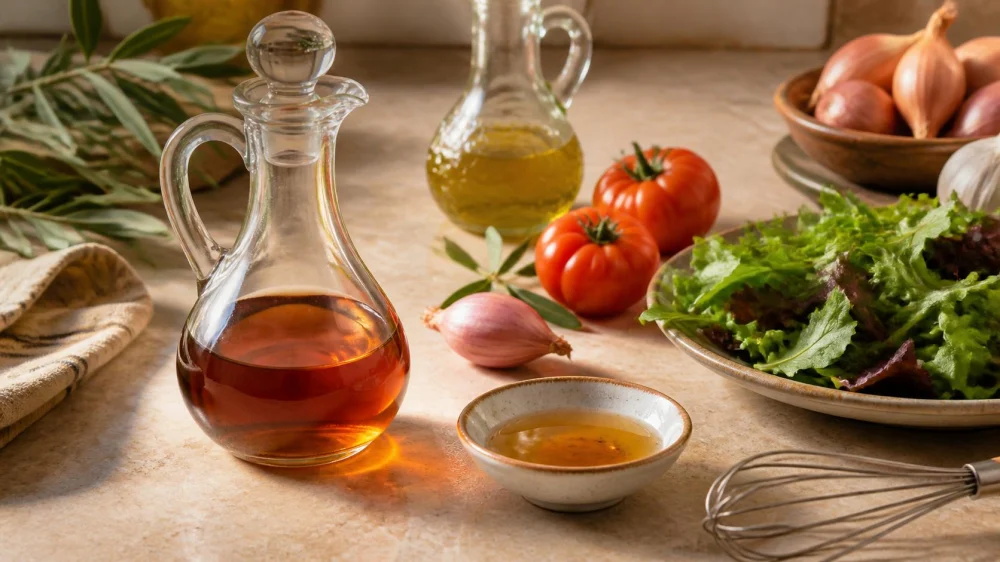
Sherry Vinegar Guide: Flavor, Labels, and Kitchen Use
On this page
Quick answer
Sherry vinegar is a wine vinegar associated with Spain’s sherry-producing tradition. It can taste bright, nutty, woody, rounded, or sharply acidic depending on the product and age. Read the label for origin, ingredients, acidity, aging language, and storage directions. Start with a small amount in dressings, soups, beans, vegetables, sauces, and marinades, then adjust after tasting the complete dish.
This guide helps U.S. shoppers and cooks understand a culinary ingredient. It does not verify a bottle’s protected origin or replace tested food-preservation recipes, medical dietary advice, or the product’s current label.

What sherry vinegar is
Sherry vinegar is vinegar made through acetous fermentation of wine connected to sherry production, giving acidity alongside wine-derived aroma and matured flavor. It is vinegar, not a glass of sherry wine, and the two are not interchangeable.
Spanish labels may use the term “vinagre de Jerez.” Products that make geographic or protected-designation claims should be evaluated by their complete labeling and current official requirements, not by a decorative bottle or the word “style.”
The ingredient can provide both acidity and depth. Compared with a neutral distilled vinegar, it may bring more fruit, nut, wood, or caramel-like impressions, but sensory descriptions vary among tasters and products.

Bistro Mediterranean &Tapas Bar
WestbrookLower Connecticut River Valley Planning RegionConnecticut
704 Boston Post Rd, Westbrook, CT 06498, USA
How flavor and aging can differ
Younger or lighter products may emphasize clean acidity and fresh wine notes. Longer-matured versions can taste rounder or more concentrated, with greater wood, dried-fruit, or nut-like character. Age alone does not guarantee that a bottle fits every dish.
The base wine, production method, time, blending, storage, and bottling all affect flavor. Color is only one clue: a darker vinegar is not automatically sweeter, older, or higher quality.
For a delicate salad, a bright and restrained vinegar may be easiest to balance. For lentils, roasted vegetables, pan sauces, or braised dishes, a more developed vinegar can stand beside stronger flavors. These are starting points, not rigid Spanish rules.
How to read the label
- Product identity: distinguish vinegar, sherry wine, cooking wine, and a sherry-style flavored product.
- Origin claim: look for specific, verifiable wording rather than relying on imagery.
- Ingredients: check for added coloring, sweetener, sulfites, or other components relevant to your needs.
- Acidity: note the stated acidity when present, especially if a recipe depends on it.
- Aging language: determine whether an age, category, or method is clearly defined on that bottle.
- Storage: follow the producer’s directions before and after opening.
People with allergies, sensitivities, or dietary restrictions should use current package information and qualified guidance. Restaurant staff may need to confirm the vinegar used in a sauce or dressing.
Where to use it
Use sherry vinegar where both acidity and aromatic depth help the dish:
- vinaigrettes for leafy salads, tomatoes, beans, or roasted vegetables;
- soups and stews that taste flat after salt and texture are already balanced;
- pan sauces or reduced cooking juices, added with attention to heat;
- marinades where a tested recipe defines time, temperature, and food safety;
- cold sauces, relishes, and vegetable preparations;
- a few finishing drops on lentils, grilled foods, or cooked greens.
Acid can brighten a dish, but it cannot repair burned ingredients, unsafe storage, or excessive salt. Add it for flavor, not as a substitute for refrigeration or safe handling.
How to balance acidity
- Taste the vinegar alone in a tiny amount. Notice sharpness, sweetness, wood, fruit, and aroma.
- Begin below the final target. Different bottles can vary enough to change a familiar recipe.
- Combine with the full dish. Oil, salt, starch, sweetness, and cooking liquid change how acidity is perceived.
- Wait and retaste. Warm dishes can integrate acid differently as they cool.
- Adjust one element at a time. More oil or food volume can soften a dressing; more sugar is not the only answer.
- Record the bottle and amount. This makes the result easier to repeat.
When deglazing, keep face and hands away from steam and splatter. Follow cookware and recipe guidance, especially around hot fat.
Selection and cooking checklist
- Vinegar distinguished from sherry wine
- Origin and protected-status claims read precisely
- Ingredients, allergens, acidity, and storage directions checked
- Flavor intensity matched to the dish
- Small quantity tasted before full recipe use
- Acid added gradually and retasted with the complete dish
- Clean utensils used and bottle closed promptly
- Tested preserving recipe followed when preservation is the goal
Limitations and safety notes
- Do not substitute vinegars in canning or shelf-stable preserving unless a tested recipe permits it.
- A marinade does not make unsafe meat, seafood, or vegetables safe; time and temperature controls still apply.
- Flavor notes and perceived quality are subjective.
- Aging and origin claims require label and certification context.
- Follow current medical guidance for acid-sensitive conditions, allergies, or restricted diets.
Frequently asked questions
Is sherry vinegar alcoholic?
It is produced from wine through vinegar fermentation, but final composition varies. For a strict dietary or medical concern, consult the current product information and qualified guidance.
Can I replace sherry vinegar with sherry wine?
No. Wine does not provide the same acidity or function. A recipe-specific vinegar substitution is more appropriate when the recipe allows it.
Is older sherry vinegar always better?
No. A mature, concentrated flavor may suit a finishing use, while a brighter vinegar may work better in a light dressing. Fit matters more than age alone.
Can I use it for pickling?
Use only a tested recipe that specifies a suitable vinegar and acidity. Flavor substitutions in casual cooking are different from safety-critical preserving substitutions.
How should I store an opened bottle?
Follow the label, close it tightly, prevent contamination, and protect it from unsuitable heat or light.
Sources and evidence notes
This article follows broad culinary and food-safety principles: distinguish vinegar from wine, read labeling claims precisely, balance acidity gradually, store according to the producer, and use tested recipes for preservation. Exact composition, protected status, aging category, and flavor depend on the bottle.
Next steps
Compare two bottles by product identity, ingredients, acidity, origin wording, and aging statement. Taste a tiny amount, then make a small vinaigrette and record the ratio. Use that result to decide whether the vinegar belongs in delicate salads, hearty cooked dishes, or as a measured finishing accent.



 Boqueria Flatiron4.0 (2233 reviews)
 Latin Deli Restaurant5.0 (3 reviews)
 El Pote Español4.0 (450 reviews)
 Toro Kitchen + Bar4.0 (386 reviews)
 Barcelona Wine Bar4.0 (1027 reviews)
 Las Palmas Deli4.0 (225 reviews)
 Exploring Spanish Rice Recipes for Weeknight Dinners
 Spanish Mediterranean Dinner Menu Ideas for a Perfect Tapas-Style Evening
 Spanish Dinner Menu with Appetizer and Dessert: A Culinary Guide
 The Best Spanish Restaurants in Phoenix
 How to Make Spanish Tarta de Chocolate y Almendra: Chocolate Almond Cake Recipe
 The Best Spanish Food Tours in Spain: Discover Authentic Culinary Delights