Spanish Churros and Hot Chocolate: How to Order and Enjoy Them
On this page
- Quick answer
- Know the churro styles
- Understand Spanish hot chocolate
- Choose a portion
- Ask about freshness and timing
- Dip, sip, and share
- Choose sugar and coatings
- Ask allergen and dietary questions
- When people eat churros
- Build a balanced order
- Takeout and reheating
- Respect regional and restaurant styles
- Ordering checklist
- Frequently asked questions
- Next steps
Quick answer
At a Spanish café or restaurant, order churros alone, with coffee, or with thick hot chocolate for dipping. Ask whether the plate contains thin ridged churros, thicker porras, filled churros, or a house variation; how many pieces are included; and whether the chocolate is a cup for drinking, a dense dipping chocolate, or both.
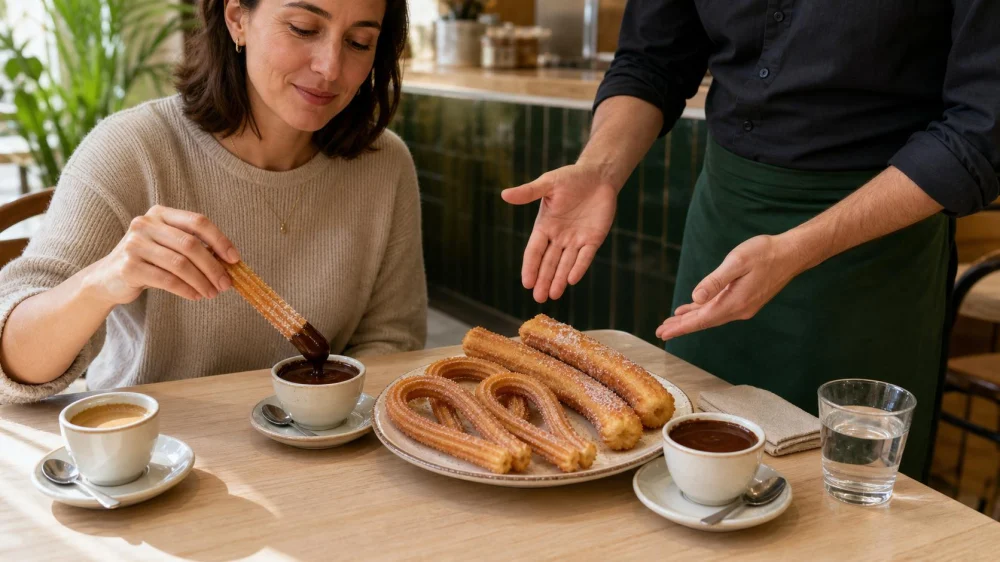
Eat churros while they are fresh and crisp. Dip one end into chocolate, take a manageable bite, and use the saucer or plate to catch drips. Share from a central plate only with clean individual handling. Recipes and customs vary, so the restaurant’s description is more useful than insisting on a single “authentic” shape or sugar coating.
Know the churro styles
A familiar Spanish churro is a strip or loop of fried dough with a ridged exterior, crisp surface, and tender interior. Shape, thickness, length, and color vary by shop and equipment.
Porras are generally thicker and can have a lighter, airier interior. A menu may distinguish porras from churros or group them together. Ask if you prefer a thin crisp piece or a substantial soft-centered one.
Some restaurants serve filled churros with chocolate, custard, caramel-like fillings, or fruit. These are different from plain churros dipped at the table and may be sweeter and harder to share.
House versions may use spirals, bite-size pieces, sandwiches, ice cream, sauces, or savory toppings. Read the description rather than assuming every item named churro matches a Spanish churrería serving.
Understand Spanish hot chocolate
Chocolate served with churros in Spain is often thicker than typical American hot cocoa. It may coat a churro and be eaten with a spoon as well as sipped. Thickness varies by recipe and location.
The flavor can be dark and bittersweet, balanced and milky, or quite sweet. Ask whether the restaurant uses dairy, plant milk, water, starch, cocoa, solid chocolate, or a prepared mix when ingredients matter.
A small cup may be designed for dipping rather than as a full beverage. Confirm size before ordering separate drinks for everyone.
Let very hot chocolate cool before dipping. Thick liquid can retain heat and cling to food, creating a burn risk even when the cup feels manageable.
Choose a portion
Ask how many pieces come in an order and whether the serving is sized for one person or the table. Thin churros, thick porras, and bite-size versions are difficult to compare by count alone.
For two diners after a full meal, one shared order with one or two drinks may be enough. At breakfast or merienda, each person may want a larger portion.
If trying several desserts, order the smallest available plate first. Fresh churros are much better than an oversized portion that cools and softens.
Confirm whether chocolate, coffee, or sauce is included. A menu bundle may price differently from separate items.
Ask about freshness and timing
Churros are at their best soon after frying. A crisp exterior and warm interior depend on timing, oil temperature, dough, and thickness.
Ask whether the kitchen fries them to order and how long preparation usually takes. At a busy churrería, batches may move quickly; at a full-service restaurant, dessert may require extra time.
Tell the server when you want the order fired. If the table is still finishing savory dishes, waiting can prevent churros from sitting.
Color alone does not prove freshness. A dark churro may reflect recipe or frying, while a pale one can still be crisp. Aroma, heat, and texture provide better clues.
Dip, sip, and share
Hold a churro over the cup or plate, dip a short section, pause for excess chocolate to fall back, and take a bite. Deep plunging can overflow a small cup or soften the entire piece.
Do not double-dip a bitten piece into a shared cup. If sharing chocolate, divide it into individual cups or use a clean spoon to place some on each plate.
A spoon is useful for the remaining chocolate, especially when it is dense. Ask for one rather than using fingers to retrieve a broken churro.
Coffee, café con leche, or another drink can accompany churros even without chocolate. There is no requirement to finish the entire cup of dipping chocolate.
Choose sugar and coatings
Some Spanish churros are served with plain granulated sugar; others arrive with little or no coating because the chocolate provides sweetness. Cinnamon sugar is common in other churro traditions but is not universal in Spain.
Ask for sugar on the side if you want control. Powdered sugar can be messy and may signal the restaurant’s own presentation rather than a regional rule.
Filled churros and multiple sauces can become very sweet. Balance them with unsweetened coffee, water, or a smaller portion.
Taste before adding sugar. Fresh dough, frying aroma, and chocolate should remain noticeable.
Ask allergen and dietary questions
Churros commonly contain wheat. Recipes may also contain milk, egg, or other ingredients, and frying oil may be shared with foods containing allergens. Ask about the specific batter and fryer.
Hot chocolate often contains milk and may contain soy, nuts, or wheat from thickeners or shared production. Plant-based milk does not guarantee a vegan preparation if the chocolate or garnish contains dairy.
Filled churros introduce additional concerns such as egg custard, dairy, nuts, or sesame. Decorative sauces and ice cream add their own ingredients.
Tell staff that you have an allergy and ask about cross-contact. “No topping” is not sufficient when the dough, oil, equipment, or chocolate may contain the allergen.
When people eat churros
Churros can be eaten at breakfast, as an afternoon snack, after an evening out, during celebrations, or whenever a churrería serves them. They are not limited to restaurant dessert.
Spanish meal schedules and regional habits vary. A café may offer churros only in the morning, while a specialist shop may serve them for longer hours.
In the United States, Spanish restaurants often place churros on the dinner dessert menu. That adaptation does not prevent the dish from being enjoyed respectfully.
Check hours before making a special trip. Fresh production may stop before the restaurant closes.
Build a balanced order
After a rich tapas meal, share a plain churro plate with one chocolate. After a lighter meal, porras or filled churros may work as a more substantial dessert.
Choose contrast. If dinner included many fried items, consider coffee or a fruit-forward dessert instead, or order a very small churro portion.
Water helps alongside thick chocolate and fried dough. Ask for it rather than relying only on sweet beverages.
For a group, mix plain churros and porras if offered, then choose one or two sauces instead of every topping. This makes the texture comparison easier.
Takeout and reheating
Ask for chocolate in a tightly sealed separate container. Steam trapped with hot churros softens the crust, so vented packaging may be preferable during a short trip.
Travel time matters. Churros decline quickly as they cool and absorb moisture. If the destination is far away, ask whether a fresh pickup time can be coordinated.
Follow restaurant reheating guidance and food-safety instructions. An oven or air fryer may restore some crispness when appropriate; a microwave often softens fried dough. Filled churros need extra care because the center can become much hotter than the exterior.
Refrigerate perishable chocolate and fillings promptly. Do not leave dairy-based sauce in a warm car.
Respect regional and restaurant styles
Churro traditions exist across Spain and many countries, each with distinct doughs, shapes, coatings, fillings, and serving customs. A Spanish restaurant may focus on one region or present a contemporary version.
Ask, “How does your kitchen serve churros?” rather than testing the staff against a social-media definition. The answer may reveal porras, a family recipe, or a special chocolate.
Avoid calling one national style the only authentic version. Describe what you prefer—thin, thick, crisp, filled, lightly sweet, or dark chocolate—so staff can guide you.
Pronunciation matters less than curiosity and courtesy. Pointing to the menu is perfectly acceptable.
Ordering checklist
- Ask whether the order contains churros, porras, filled pieces, or a house style.
- Confirm piece count, thickness, and sharing size.
- Ask whether chocolate is thick for dipping or made as a drink.
- Check wheat, milk, egg, soy, nut, and fryer cross-contact concerns.
- Time the order so it arrives fresh.
- Let hot chocolate cool enough to dip safely.
- Use individual cups or avoid double-dipping when sharing.
- Package chocolate separately for takeout.
Frequently asked questions
Do Spanish churros always contain cinnamon?
No. Plain sugar or no coating is common in Spain, while cinnamon sugar is associated with other churro traditions and some restaurant variations.
What is the difference between churros and porras?
Porras are generally thicker and may be airier inside. Exact names, shapes, and recipes vary by region and shop.
Is Spanish hot chocolate a beverage or a sauce?
It can function as both. Many versions are thick enough for dipping and spooning but can still be sipped. Ask how the restaurant prepares it.
Are churros vegan?
Some dough recipes may be plant-based, but others contain milk or egg, and shared fryers create cross-contact. Chocolate and fillings add more variables.
Why did my takeout churros become soft?
Steam, sauce, time, and closed packaging soften the crust. Keep chocolate separate and eat the churros as soon as practical.
Next steps
Choose thin churros or thick porras, confirm the portion and chocolate style, and share allergy information. Ask the kitchen to time the order for freshness. Dip carefully, compare textures, and treat the restaurant’s specific version as part of the experience.
Serving customs and recipes vary across Spain, the wider Spanish-speaking world, and individual restaurants. There is room for tradition and thoughtful adaptation.


 Mi pueblo Restaurant 24.0 (109 reviews)
 Spanish Food Restaurant4.0 (47 reviews)
 Toro Kitchen + Bar4.0 (926 reviews)
 Ernesto's4.0 (531 reviews)
 Matador Tacos & Tapas Bar4.0 (569 reviews)
 Socarrat Paella Bar - Midtown East4.0 (1233 reviews)
 How to Make Spanish Arroz con Mariscos, Pollo y Verduras: Seafood, Chicken, and Vegetable Paella
 The Best Spanish Restaurants in Nashville for Gourmet Paella
 Traditional Spanish Seafood with Lemon and Garlic – A Flavorful Mediterranean Dish
 How to Make Spanish Tarta de Almendra y Limón: Almond and Lemon Cake
 Traditional Spanish Seafood Pasta Recipe Authentic Mediterranean Guide
 How to Make Spanish Gazpacho Andaluz: Chilled Tomato Soup