
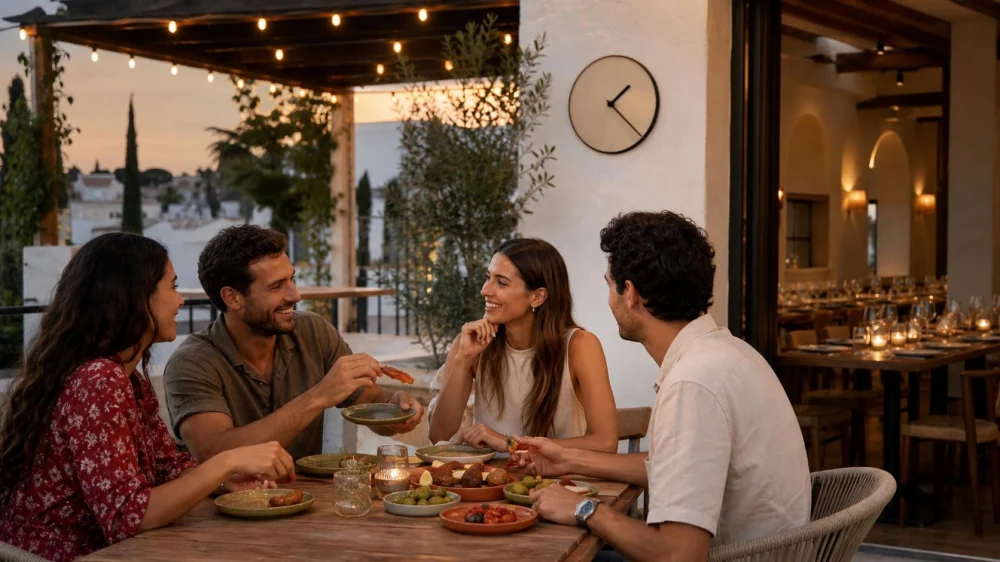
How Spanish Meal Times Shape a Restaurant Experience
On this page
Quick answer
In Spain, lunch and dinner commonly happen later than in the United States: restaurants often serve lunch from about 1–4 p.m. and dinner from about 8–11:30 p.m. Tapas may be a pre-meal social stop or the meal itself. A Spanish restaurant in the United States does not need to copy those hours, but understanding the rhythm helps diners order in stages, share plates, allow conversation time, and distinguish a quick tapas visit from a full dinner.
Spanish meal rhythm describes the timing and social sequence of breakfast, midday drinks or tapas, lunch, afternoon snacks, evening tapas, and a later dinner rather than one universal menu served the same way all day.
Typical meal times in Spain
Spain’s official tourism site gives broad service windows: breakfast is often available from 7 a.m. to noon, meeting for a drink or tapas is common from noon to 2 p.m., lunch is typically served from 1–4 p.m., and dinner from 8–11:30 p.m. Large cities, tourist areas, seasons, regions, and individual households vary.
Lunch has traditionally been a substantial meal, while dinner may happen later and can be lighter, although modern work patterns and personal habits create many exceptions. The useful lesson for a restaurant diner is not to imitate an exact clock; it is to expect that Spanish food culture often gives meals a longer social frame.

Bota Tapas & Paella Bar
San FranciscoSan Francisco CountyCalifornia
490 Geary St, San Francisco, CA 94102, USA
Where tapas fit into the day
A tapa is a small portion, but tapas are also a way of eating. People may have one or two bites with a drink before lunch, move among several bars, or combine multiple plates into lunch or dinner. The official Spain tourism guidance describes tapeo as tasting and sharing in company, either as an aperitif or as the main meal.
Tapas are not automatically appetizers that must arrive before a large entrée. Depending on the restaurant, plates may come as they are ready, and the table may order a first round before deciding what else it wants.
This style is best for groups that enjoy sharing and a flexible pace. It is not ideal when everyone needs a separate complete plate, has incompatible dietary restrictions, or must leave on a strict schedule without discussing timing.
How this translates to US restaurants
Spanish restaurants in the United States usually follow local opening hours, staffing, reservation patterns, and customer expectations. An early 5:30 p.m. dinner can still feature Spanish dishes and thoughtful service. Authenticity does not depend on forcing guests to wait until 10 p.m.
However, a restaurant may preserve elements of the Spanish rhythm through:
- small plates designed for sharing;
- several ordering rounds rather than one fixed course;
- aperitivo or happy-hour service before dinner;
- large-format rice, roast, or seafood dishes that require advance ordering;
- time for conversation after the food is cleared.
Ask how the specific kitchen sequences dishes. Some United States tapas restaurants pace plates; others send each item as soon as it is ready.
Plan a Spanish-style meal
- Choose the format. Decide between a short tapas stop, a full shared meal, or drinks and bites before another activity.
- Check service hours. Confirm the kitchen schedule, reservation policy, and whether large dishes require advance notice.
- Allow enough time. A shared meal with several rounds needs more time than ordering one plate each.
- State dietary needs first. Discuss allergies and cross-contact before shared food reaches the table.
- Order a first round. Start with a few contrasting items and adjust based on portion size and appetite.
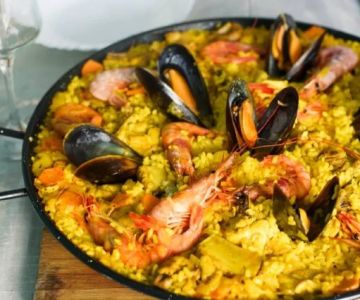
- Confirm the main dish. If ordering paella or another large-format item, ask when it will arrive and how many people it is designed to serve.
- Request the check clearly. Do not assume lingering means staff have forgotten; dining cultures differ in how quickly checks are presented.
Build a balanced shared order
For a table of mixed eaters, combine temperature, texture, cooking method, and richness:
- one cold or fresh item, such as a salad, marinated vegetable, or chilled soup when available;
- one simple vegetable plate;
- one crisp or fried dish;
- one protein or mushroom-based savory plate;
- bread or another starch where it belongs with the dishes;
- a larger rice, stew, roast, or fish dish only if the group still wants it.
This is a decision framework, not a traditional mandatory sequence. Regional Spanish menus vary widely, and a specialist restaurant may focus on one area or technique.
Important limitations and notes
Spain has multiple regions, languages, climates, work patterns, and family customs. The official time windows are broad travel guidance, not rules that every person follows. Holidays, summer weather, city size, tourism, and contemporary schedules affect service.
Shared dining requires extra care for food allergies, celiac disease, religious restrictions, and vegetarian or vegan needs. Serving utensils, sauces, fryers, and plate contact can transfer ingredients. Tell the restaurant before ordering and do not rely on a dish name alone.
Alcohol is optional. Tapas can be paired with water or nonalcoholic drinks; anyone who drinks should follow age laws, medication guidance, health needs, and safe transportation planning.
Sources and evidence notes
Spain’s official tourism page on typical opening and meal times gives approximate breakfast, tapas, lunch, and dinner windows. Its guide to tapas culture explains that tapeo may be an aperitif or a complete meal centered on tasting, sharing, and company. These sources describe Spain; individual United States restaurants set their own hours and service model.
Frequently asked questions
What time do people usually eat dinner in Spain?
Official tourism guidance gives a broad restaurant dinner window of about 8–11:30 p.m. The actual time varies by region, season, household, work schedule, and occasion.
Are tapas always eaten before dinner?
No. They can accompany a pre-meal drink, form lunch or dinner, or be part of an evening moving among venues. Context and portion size matter.
Will a Spanish restaurant bring every plate at once?
Not necessarily. Small plates may arrive as ready, while a restaurant may pace courses deliberately. Ask your server if timing matters or if the table wants a particular sequence.
How many tapas should one person order?
There is no reliable universal number because plate size and appetite vary. Ask the restaurant, start with fewer dishes, and add another round.
Is paella a typical dinner dish everywhere in Spain?
No. Paella has Valencian roots and regional context; Spanish dining is much broader. Restaurants may serve rice at lunch or dinner, but local and household patterns vary.
Next steps
Before visiting a Spanish restaurant, decide whether you want a quick tapas stop or a full shared meal, check hours and large-dish lead times, and reserve enough time for staged ordering. Start with a small contrasting round, ask how the kitchen paces plates, and let appetite—not a fixed count—guide what comes next.


 Enoteca5.0 (2 reviews)
 Pilar Caribbean Restaurant4.0 (109 reviews)
 Bar Jamon4.0 (273 reviews)
 El Cocinero Restaurant4.0 (246 reviews)
 Tia Pepa4.0 (88 reviews)
 Telefèric Barcelona Los Angeles4.0 (364 reviews)
 The Best Spanish Restaurants in Detroit for Family Dining Experiences
 How to Make Spanish Pollo al Horno con Hierbas: Herb-Roasted Chicken
 Authentic Spanish Sangria with Red Wine and Fresh Citrus Fruits
 How to Make Spanish Churros con Chocolate: Fried Dough with Chocolate
 Authentic Spanish Chicken Croquettes Recipe Step by Step
 Traditional Spanish Seafood Soup with Fresh Herbs