
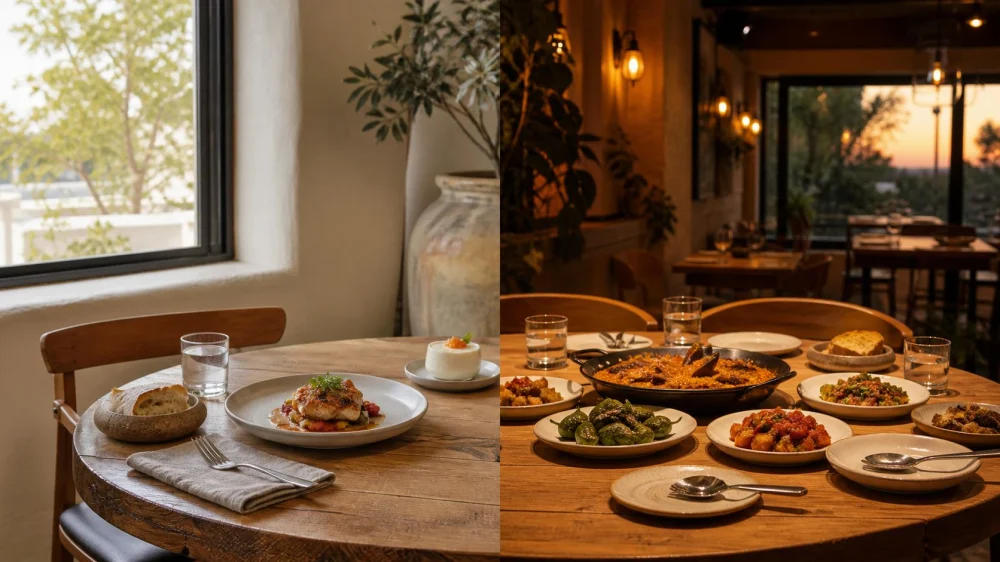
Spanish Restaurant Lunch vs Dinner: What Changes?
On this page
Quick answer
Lunch and dinner at a Spanish restaurant may differ in hours, menu size, set-menu availability, portion formats, kitchen pacing, reservations, and price. Check the restaurant’s current menu for the exact day and time, then confirm when the kitchen stops taking orders. In the United States, do not assume a restaurant follows meal times common in Spain or serves the same dishes all day.
This guide is for diners comparing Spanish restaurant visits in the United States. It focuses on planning and menu interpretation; individual restaurants, cities, weekdays, seasons, and holidays can change every detail.
Start with current service hours
“Open” does not always mean the full kitchen is accepting every order. A restaurant may have separate lunch and dinner services, a break between them, limited bar food in the afternoon, or different hours by day.
- Check the date-specific hours on the restaurant’s official website or reservation page.
- Confirm the final reservation time and the kitchen’s last-order time.
- Ask whether the restaurant closes between lunch and dinner.
- Verify weekend brunch, holiday, event, and seasonal schedules separately.
- For a large group, ask whether everyone must be seated before the order is placed.
- Call when online listings conflict; third-party directory hours can be outdated.
If you want a cooked-to-order rice dish, large roast, or tasting menu, ask whether it must be reserved or ordered by a certain time. An available table does not guarantee that every long-preparation dish is still available.

Compare lunch and dinner menus
Open both current menus side by side. Look beyond the dish names.
Lunch may offer
- A smaller set menu or prix-fixe combination.
- Faster individual plates for business or daytime dining.
- Lunch-only portions or prices.
- A shorter list of tapas, raciones, or large-format dishes.
- Different beverage or dessert options.
Dinner may offer
- The restaurant’s full menu or more shareable plates.
- Longer tasting formats or dishes that require extra preparation.
- More reservation demand and a defined table duration.
- A slower meal built around several rounds.
- Different specials, service charges, minimums, or entertainment conditions.
These are possibilities, not rules. Some restaurants serve identical menus all day, while others make lunch the main opportunity for a fixed menu. Compare included courses, portion size, bread, sides, dessert, beverages, taxes, and service charges before judging value.
Choose the better time for your group
Choose lunch when the group wants daylight dining, a shorter visit, a possible set menu, easier travel, or a quieter meal. Lunch can also help families or diners who prefer earlier schedules, but confirm whether the desired dishes are offered.
Choose dinner when the group wants the broadest menu, multiple rounds of shared food, a special-occasion atmosphere, or an evening reservation. Dinner may be busier and require earlier booking.
Also consider:
- Accessibility: Daylight, parking, public transportation, noise, and entrance staffing may differ.
- Children: Ask about high chairs, children’s portions, kitchen timing, and reservation limits.
- Dietary needs: Confirm that suitable dishes and staff able to answer questions are available during that service.
- Group size: Large parties may have a required set menu, deposit, limited reservation slots, or one-check policy.
- Atmosphere: Music, lighting, bar activity, and table turnover can change between services.
Reservation and arrival checklist
- Use the official source. Check the restaurant’s website, current menu, and reservation system for the selected date.
- Confirm the menu window. Ask when lunch ends, dinner begins, and whether the full menu is available at your booking time.
- Name must-have dishes. Confirm availability, minimum order, and advance notice for any dish central to the visit.
- Share dietary needs early. Ask what the kitchen can support during that specific service.
- Review fees and policies. Note deposits, cancellation terms, table duration, automatic service charge, cake fee, or large-party minimums.
- Plan arrival. Check parking, transportation, accessibility, and whether the whole group must arrive together.
- Recheck on the day. Weather, private events, staffing, or supply can affect hours and menu availability.
Save the confirmation and record the person who answered a special request. A request is not confirmed merely because it appears in a reservation note; ask the restaurant to acknowledge it.
Limitations and important notes
US service is not Spain service: Spanish cultural meal times can provide context, but a restaurant in the United States sets hours around its own market, staff, lease, and local rules. Always use the local restaurant’s current information.
Set menus require comparison: A fixed lunch price may be attractive, but check portion, choices, substitutions, beverages, dessert, tax, and service. Dinner is not automatically more expensive once the full order is compared.
Allergies and dietary needs: A lunch version of a dish can use different sides, sauce, or preparation from dinner. Discuss the exact menu and cross-contact practices with the restaurant. Follow the diner’s medical plan.
Late arrival: A reservation does not always extend the kitchen schedule. Call if delayed rather than assuming the table and full menu will remain available.
Sources and evidence notes
Spain’s official tourism portal explains that meal times in Spain are generally later than in many countries and describes broad lunch and dinner service windows there. See Spain.info’s current opening-times guidance.
That cultural background does not establish the hours of a Spanish restaurant in the United States. The restaurant’s own date-specific schedule, menu, and staff confirmation are the relevant sources for a local visit.
Frequently asked questions
Is lunch always cheaper than dinner?
No. Some restaurants offer lunch combinations, while others use the same menu and prices all day. Compare included courses, portion sizes, fees, and the dishes the group actually wants.
Will paella be available at lunch and dinner?
Availability varies. A rice dish may require a minimum number of diners, advance order, or preparation time. Confirm the exact dish and service rather than relying on an older online menu.
Does a Spanish restaurant in the US serve dinner late?
Not necessarily. US restaurants follow local demand and operating rules. Check current kitchen hours and the final order time for the chosen date.
Can a lunch reservation continue into dinner service?
Do not assume it can. The restaurant may close, reset the room, change menus, or have another booking. Ask about table duration and service transitions.
Is the atmosphere quieter at lunch?
Often, but not always. Weekend brunch, business districts, private events, and tourist seasons can make lunch busy. Ask about music, event schedules, and seating if noise matters.
Conclusion and next steps
Choose lunch or dinner by comparing the real menu, hours, pace, availability, and group needs—not by assuming one service is always cheaper or more authentic. Verify the kitchen cutoff, reserve must-have dishes, disclose dietary needs, and check policies for the selected date. The best time is the one when the restaurant can serve the meal your group actually wants.


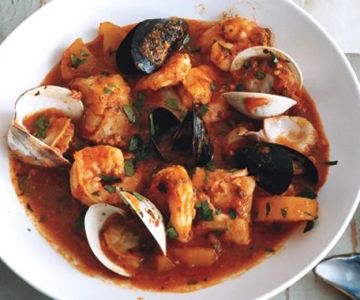

 La Rambla Restaurant & Social Room4.0 (857 reviews)
 Solea Restaurant and Tapas Bar4.0 (1146 reviews)
 The Singing Sliders4.0 (2 reviews)
 Boqueria Flatiron4.0 (2233 reviews)
 La Feria4.0 (1167 reviews)
 Segovia Restaurant4.0 (2529 reviews)
 The Best Spanish Restaurants in Charlotte for Tapas and Paella Nights
 Easy Spanish Sangria with Sparkling Water Recipe Guide
 Authentic Spanish Seafood Rice with Saffron Broth Recipe Guide
 The Best Spanish Restaurants in Houston for Tapas Nights and Family-Friendly Dining
 How to Make Spanish Churros con Chocolate: Fried Dough with Chocolate
 How to Make Spanish Pollo al Horno con Limón, Ajo y Hierbas: Lemon Garlic Herb Roasted Chicken