
Spanish Rice Dishes Beyond Paella: Dry, Creamy, Soupy, and Oven-Baked
On this page
Quick answer
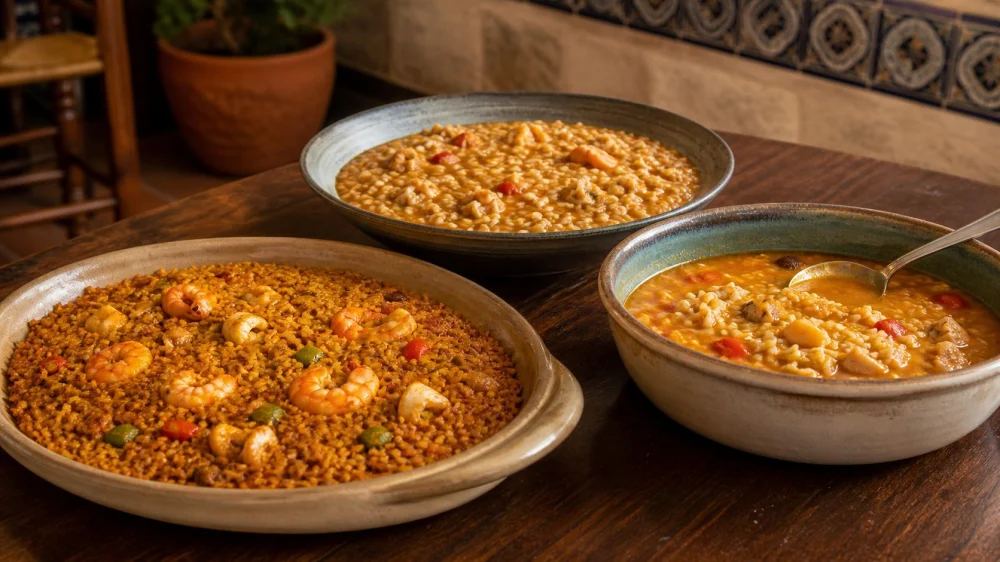
Spanish restaurant rice is broader than paella. Use texture as the first clue: seco is relatively dry with separate or set grains, meloso is creamy or flowing, caldoso is served with noticeable broth, and oven-baked rice is typically drier with a distinct top and edge texture. Then ask about the stock, main ingredients, pan or pot, minimum order, preparation time, and whether the dish is designed for sharing.
Names and consistency vary by region and restaurant, so ask how the kitchen prepares its version.
Tablas Woodstone Taverna
Mill CreekSnohomish CountyWashington
15522 Main St, Mill Creek, WA 98012, USA
Start with the rice texture
Texture often predicts the dining experience better than a familiar ingredient name. A wide shallow pan encourages evaporation; a deeper casserole or pot can retain more liquid; oven cooking can create a dry, set surface. The rice variety and resting time also matter.
- Seco: dry enough that little free broth remains.
- Meloso: cohesive and creamy but usually not a bowl of broth.
- Caldoso: spoonable rice served with broth.
- Al horno: oven-baked rice with a drier, structured finish.
- Ask the server to describe the house texture if the term is absent.
Choose a dry rice dish
Dry rice can include seafood, meat, vegetables, or combinations. Arroz negro commonly gets its dark color from squid or cuttlefish ink and often uses seafood stock. Arroz a banda and other regional dishes can build rice flavor from fish stock while serving seafood in different ways.
Ask whether ingredients are peeled, bone-in, shell-on, or served separately, and whether a crisp bottom or edge is part of the preparation.
Compare meloso and caldoso
Meloso rice sits between dry and soupy: the liquid and starch create a loose, creamy consistency. Caldoso retains more broth and is commonly eaten with a spoon. Both can continue absorbing liquid after leaving the kitchen, so they are best eaten soon after arrival.
Ask whether the dish is served in individual bowls or one shared vessel and whether the broth is fish, shellfish, meat, or vegetable based.
Understand oven-baked rice
Oven-baked rice can combine rice with stock, vegetables, legumes, meat, sausage, or other regional ingredients. The heated dish may remain very hot after it reaches the table. Let staff place it, keep hands away from the vessel, and use the serving utensil provided.
A crisp top does not mean every layer will have the same texture; the interior may be softer and retain heat.
Ask about stock and ingredients
The visible topping does not reveal the complete dish. Stock, sofrito, seasoning, sausage, seafood, ink, aioli, garnish, and shared cookware can add allergens or ingredients relevant to dietary restrictions. A vegetable-topped rice may still use meat or seafood stock.
- State allergies and dietary needs before ordering.
- Ask what stock forms the base.
- Confirm shells, bones, and whole spices.
- Ask whether aioli or sauce contains egg or other allergens.
- Check what the restaurant can verify about cross-contact.
Confirm portion, timing, and sharing
Many rice dishes require advance preparation, have a minimum order, or are priced per person with a minimum number of diners. Ask for the total price, intended number of servings, estimated preparation time, and whether the table must order one rice style.
Order appetizers carefully so the group still has appetite when the rice arrives. Ask whether leftovers can be packed and follow safe storage guidance.
Important limitations
This is general U.S. restaurant guidance. Spanish rice terminology, recipes, consistency, serving vessels, portions, and prices vary by region and chef. Use the restaurant's current description and qualified medical guidance for food allergies or dietary conditions.
Evidence notes
Spain's official tourism guidance describes regional rice dishes as dry, meloso, soupy, vegetable-, seafood-, fish-, or meat-based, with cookware influencing texture. The ordering framework converts that diversity into questions about consistency, stock, ingredients, timing, and portion.
FAQ
Is every Spanish rice dish paella?
No. Spain has many regional dry, creamy, soupy, and oven-baked rice dishes.
What makes arroz negro black?
It commonly uses squid or cuttlefish ink; ask about the restaurant's recipe.
Is meloso the same as risotto?
Both can be creamy, but ingredients, rice, method, and regional context differ.
Why is there a two-person minimum?
The pan size and made-to-order workflow may set a practical minimum.
Can vegetable rice use seafood stock?
Yes. Confirm the complete base when diet or allergy matters.
Next steps
Choose the texture first, then confirm stock, main ingredients, hard pieces, minimum order, total price, and timing. State dietary needs and leave room in the meal for a made-to-order shared rice dish.



 Gaspar’s Restaurant4.0 (20 reviews)
 Sala Astoria4.0 (333 reviews)
 Bacaneria y Sazon4.0 (37 reviews)
 Tia Pepa4.0 (88 reviews)
 Guardado's Restaurant4.0 (434 reviews)
 Txikito4.0 (529 reviews)
 The Best Spanish Restaurants in Nashville, Tennessee for Tapas Lovers
 The Secret to Perfectly Grilled Spanish Chorizo: Tips and Techniques
 How to Make Spanish Empanadas at Home
 Best Spanish Restaurants in Charlotte for Mediterranean Cuisine
 How to Make Spanish Arroz con Pollo y Verduras: Chicken and Vegetable Paella
 Traditional Spanish Seafood Pasta Recipe for Authentic Flavor