
Spanish Sofrito Guide: Build Flavor Without Burning It
On this page
- Quick answer
- What Spanish sofrito is
- Choose and prepare the ingredients
- Follow the cooking cues
- A practical step-by-step method
- Troubleshoot common problems
- How to use the finished base
- Sofrito cooking checklist
- Limitations and safety notes
- Frequently asked questions
- Sources and evidence notes
- Your next cooking step
Quick answer
Spanish sofrito is a slowly cooked flavor base, often made from onion, tomato, olive oil, and sometimes garlic or pepper. Use a wide pan, moderate heat, and more patience than force. Cook each stage until excess moisture leaves and the aroma turns sweet and savory. Stir more often as it thickens; lower the heat immediately if dark residue forms.
This guide is for US home cooks learning a flexible Spanish technique. Sofrito varies by region, household, and final dish, so treat the ingredient list as a working framework rather than a single official formula.

What Spanish sofrito is
Sofrito is a concentrated foundation that develops flavor before rice, beans, seafood, meat, or cooking liquid joins the pan. In many Spanish preparations, aromatics soften in olive oil and tomato cooks down until its raw edge and excess water fade. The finished mixture seasons the larger dish from within.
“Sofrito” describes a technique and family of bases, not one fixed recipe. Some versions are simple onion and tomato; others include garlic, sweet pepper, herbs, or spices. Ingredients can change with the region and the food the base will support.
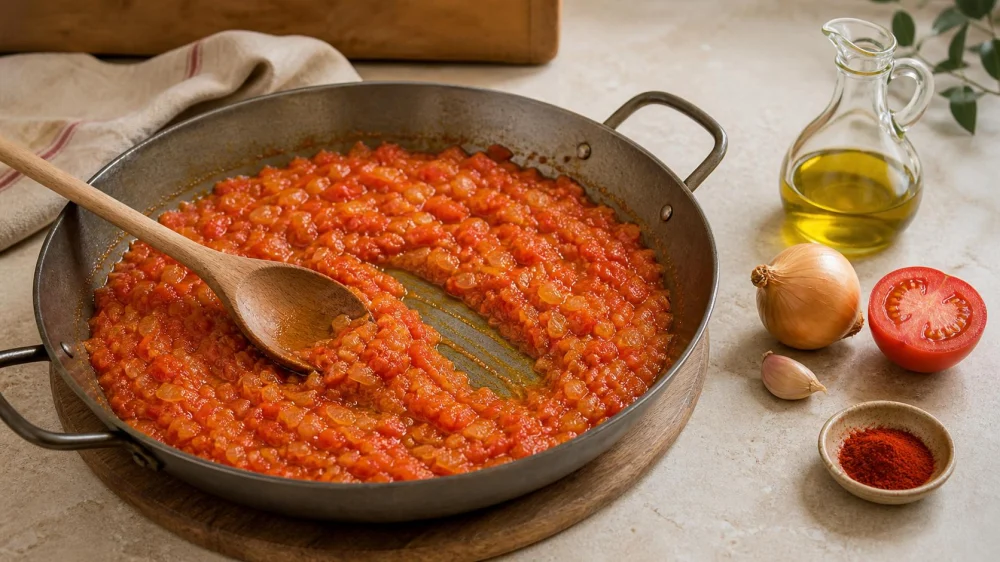
The goal is controlled concentration. The vegetables should not merely warm, and they should not burn into bitter fragments. A useful sofrito looks cohesive, smells rounded, and leaves little watery liquid moving separately in the pan.

Choose and prepare the ingredients
Onion
Finely chopped onion creates sweetness and body. A consistent cut helps the pieces soften at the same rate. If the pieces are large, the mixture may retain a chunky texture; that can be appropriate for some dishes but is harder to blend invisibly into rice or sauce.
Tomato
Fresh grated tomato, finely chopped peeled tomato, or an appropriate canned tomato product can work. The key variable is water: a juicy tomato needs more reduction, while concentrated tomato can catch on the pan sooner. Avoid assuming that every form uses the same heat and time.
Olive oil
Use enough oil to coat the pan and carry the aromatics without deep-frying them. The exact amount depends on pan width and ingredient quantity. Add a little more only if the pan looks dry before the vegetables have softened.
Garlic, pepper, herbs, and spices
Garlic can become bitter when browned too far, so add it at a stage that gives it time to become fragrant without scorching. Sweet pepper may need to soften with the onion. Paprika and dried spices can burn quickly; briefly warm them at lower heat and add liquid or the next ingredient before they darken.
Follow the cooking cues
A clock can help you stay attentive, but the pan gives better information. Ingredient moisture, stove output, cookware, and batch size all affect timing.
- Sound: early cooking may sound wet and active. As moisture leaves, the sound becomes quieter and more like a gentle sizzle.
- Appearance: onion changes from opaque and firm to soft and translucent. Tomato loses its raw, foamy look and becomes darker and more cohesive.
- Movement: a watery mixture slides around the pan; a reduced sofrito moves as a thicker mass.
- Aroma: sharp raw onion and tomato notes become sweeter, deeper, and more savory.
- Pan surface: light browning can add flavor, but black specks, acrid smoke, or a harsh smell indicate burning.
When unsure, lower the heat. Slow progress can continue; burned garlic, tomato, or paprika cannot be repaired reliably.
A practical step-by-step method
- Prepare everything first. Chop the onion evenly, prepare the tomato, and measure any garlic, pepper, herbs, or spices. Sofrito needs attention once the pan heats.
- Warm the pan gradually. Use a wide, heavy pan over moderate heat and add olive oil. The oil should loosen and shimmer gently, not smoke.
- Soften the onion. Add onion with a modest pinch of salt if it suits the final recipe. Stir to coat, then cook gently until soft. Reduce the heat if edges darken while centers remain firm.
- Add longer-cooking vegetables. If using sweet pepper, cook it until tender. Keep the mixture moving often enough to prevent a hot spot from scorching.
- Add garlic carefully. Stir until fragrant but not deeply browned. Move promptly to the next stage.
- Cook down the tomato. Add tomato and scrape up flavorful light-brown residue. Let water evaporate, stirring more frequently as the mixture thickens.
- Add delicate spices at low heat. If using paprika or another easily scorched spice, lower the heat, stir briefly, and continue with the next ingredient according to the final dish.
- Evaluate before moving on. The base should be soft, concentrated, and free of a raw tomato smell. Taste only when it is safe and cool enough, remembering that the larger dish will add seasoning and liquid.
Troubleshoot common problems
The onion is browning before it softens
The heat is probably too high or the pan too dry. Lower the heat, stir, and add a small splash of water if the recipe allows. Do not flood the pan; the aim is to slow browning while the onion softens.
The tomato stays watery
Increase evaporation rather than immediately increasing heat. Use a wider uncovered pan, keep the mixture at a controlled simmer, and stir so the base does not stick. A large batch in a small pan takes longer.
The sofrito tastes sharp or acidic
It may need further cooking to soften the raw tomato character. Check that the onion was fully softened and continue gently. Do not automatically add sugar; sweetness can mask the issue and may not suit the final dish.
Black specks or an acrid smell appear
Stop stirring burned material through the mixture. If the burning is localized, transfer the unburned top portion to a clean pan without scraping the bottom. If the taste is bitter throughout, starting again is more reliable than disguising it.
The finished dish still tastes flat
Sofrito provides a base, not every flavor the final dish needs. Review salt, stock, herbs, spices, acidity, and cooking reduction in the complete recipe. Additions should suit the final food rather than making the sofrito excessively salty on its own.
How to use the finished base
For rice dishes, the sofrito often develops before rice and cooking liquid are added. For beans or stews, it can join the pot as an aromatic foundation. For fish, shellfish, or meat, it may support a sauce or braising liquid. The next step depends on the recipe, and the base may need to remain looser or cook darker for a particular use.
Match the intensity to the main ingredient. A deeply reduced base can stand up to beans or meat, while delicate seafood may call for a cleaner, lighter touch. If the finished dish uses saffron, smoked paprika, or another distinctive seasoning, avoid adding so much to the base that the flavors compete.
Sofrito cooking checklist
- Choose a wide pan with even heat.
- Cut the aromatics consistently before starting.
- Cook over moderate or moderately low heat.
- Soften onion before adding ingredients that burn quickly.
- Adjust for the water content of the tomato.
- Stir more often as the mixture thickens.
- Lower the heat before adding paprika or delicate spices.
- Stop if the oil smokes or the aroma becomes acrid.
- Judge doneness by texture, moisture, aroma, and color.
- Season with the final dish in mind.
Limitations and safety notes
Cooking times and quantities cannot be universal because tomatoes, pan materials, stove power, and batch sizes differ. Follow a tested recipe when precise proportions matter, especially for a rice dish whose liquid ratio affects texture.
Keep raw meat and seafood separate from vegetables and finished sofrito. If the base contacts raw animal products, cook the complete dish to a safe temperature appropriate for those ingredients. Refrigerate cooked sofrito promptly in a shallow covered container; use current USDA food-safety guidance for cooling, storage, and reheating rather than leaving it at room temperature for extended periods.
Home canning requires a tested canning recipe and is not interchangeable with ordinary stovetop sofrito. Oil, vegetables, garlic, and low-acid ingredients create safety considerations that cannot be resolved by guessing at vinegar or processing time.
Frequently asked questions
Is Spanish sofrito the same as Latin American sofrito?
They belong to a related family of aromatic bases, but ingredient combinations and preparation styles vary across countries and regions. Use the version intended for the dish you are cooking.
Does sofrito always contain tomato?
No. Tomato is common in many Spanish versions, but not every regional or household preparation uses it. The term refers more broadly to the cooked aromatic foundation.
Can I blend sofrito?
You can when a smooth base suits the recipe, but blending changes texture. Blend hot mixtures only with equipment and procedures designed to release steam safely.
Can I make sofrito ahead?
Yes, if it is cooled promptly, refrigerated safely, and reheated or incorporated into the final dish appropriately. Label the container with the preparation date instead of relying on memory.
Should I caramelize the onions?
Usually the goal is thoroughly softened, sweet onion rather than the deep sweetness of a separate caramelized-onion preparation. Some recipes intentionally take the base darker, so follow the intended dish.
Sources and evidence notes
The method here reflects broad professional cooking principles: control heat, cook aromatics in stages, use sensory cues, evaporate excess moisture, and protect delicate spices from scorching. Regional Spanish recipes may use different ingredients or sequencing.
No universal cooking time, ingredient ratio, storage duration, or claim of authenticity is assumed. A tested recipe and current food-safety guidance should govern the exact dish.
Your next cooking step
Choose one dish that uses sofrito and prepare every ingredient before heating the pan. Keep the first batch small, note the changes in sound and aroma, and photograph the base when it reaches the texture you like. Those observations will help you adjust for your own stove, pan, and tomatoes the next time you cook.





 Boqueria W40th4.0 (2909 reviews)
 Gaspar’s Restaurant4.0 (20 reviews)
 The Game Changer Jeep Club Restaurant and Bar4.0 (5 reviews)
 Prado Restaurant4.0 (279 reviews)
 Pepe by Jose Andres3.0 (136 reviews)
 Asador Bastian4.0 (388 reviews)
 Spanish Fried Calamari with Lemon Aioli Recipe Guide
 Exploring Spanish Rice Recipes for Weeknight Dinners
 Easy Spanish Rice with Saffron Flavor – Authentic Yet Simple Homemade Recipe
 Spanish Grilled Octopus with Lemon and Sea Salt – Authentic Recipe Guide
 Spanish Mediterranean Recipes for Families | Rubi Spanish Table
 The Best Spanish Restaurants in Raleigh for Tapas Nights and Authentic Paella